
Li River Cruise Guilin: Sailing Through China's Most Iconic Landscape
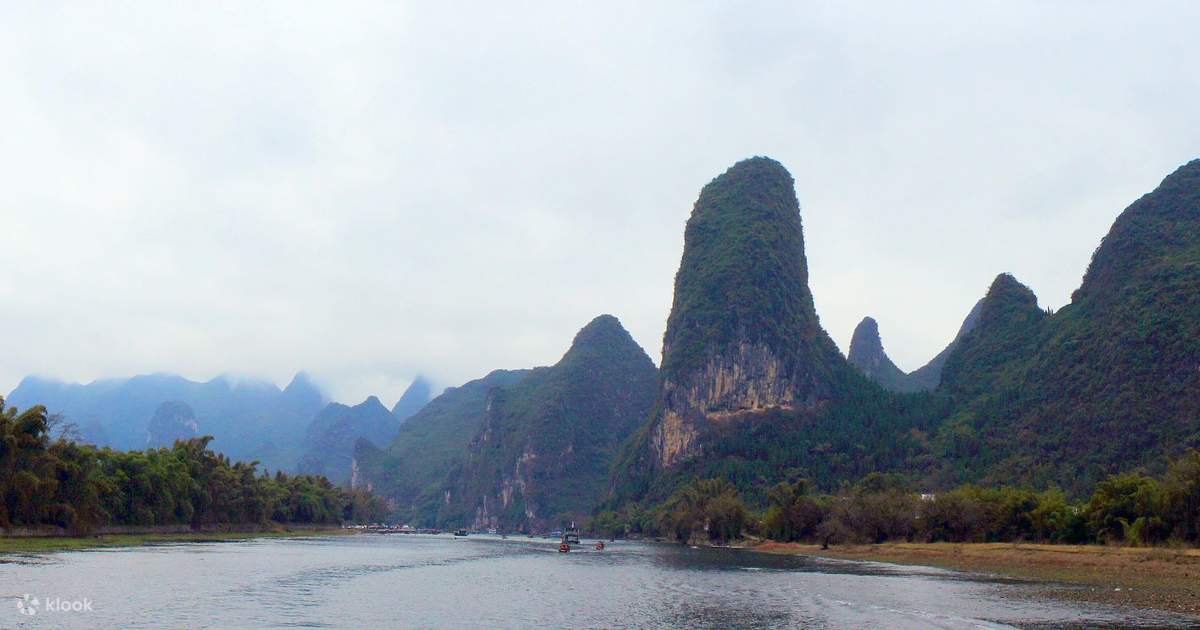
The Li River cruise from Guilin to Yangshuo covers 83 kilometers of one of China's most celebrated natural landscapes, passing between hundreds of distinctive karst limestone peaks that rise sharply from the flat river valley floor. This scenery of pointed green hills mirrored in the calm river has inspired Chinese landscape painters for over a thousand years and appears on the back of the 20 yuan note. The four-hour river journey by boat is one of the most leisurely and visually sustained ways to experience a Chinese natural wonder.
Book the Li River four-star cruise from Guilin on Klook which includes a return bus transfer from Yangshuo to Guilin and an onboard meal. The four-star boats offer better facilities, less crowding, and a more comfortable experience than the basic tourist boats. The journey covers the most scenic section of the river between the villages of Zhujiajie and Xingping, where the karst peaks are densest and the views most dramatic.
The Karst Landscape and Its Formation
The karst landscape of the Guilin and Yangshuo region formed over hundreds of millions of years as slightly acidic rainwater slowly dissolved the limestone bedrock. The process created underground cave systems that eventually collapsed, leaving the isolated peaks and towers that define the landscape today. The distinctive rounded towers, called fenglin or peak forest, are particularly concentrated in the Yangshuo area south of Guilin, where the plains between peaks are wider and agricultural land separates the individual limestone formations.
The peaks along the Li River have been given evocative names based on their shapes, following a long Chinese tradition of naming natural formations for their resemblance to animals, objects, or mythological figures. Yellow Cloth Shoal (Huangbu Tan) is one of the most photographed sections of the river, where a shallow rocky shoal creates excellent reflections of the surrounding peaks. Nine Horse Fresco Hill is another famous landmark where an ancient pattern of erosion on a cliff face is said to resemble nine horses in various poses.
The River Journey Experience
The cruise departs from Zhujiajie Dock in Guilin in the morning and arrives in Yangshuo approximately four hours later. The boat proceeds at a leisurely pace allowing for sustained viewing of the passing scenery. The upper deck provides open-air viewing of the landscape and is the best position for photography in good weather, though it lacks shade and can be hot in summer. The enclosed lower decks have windows and air conditioning.
Local fishermen with trained cormorants are sometimes seen along the river, maintaining a centuries-old fishing tradition in which the birds dive for fish and return to the boat, where a ring around their neck prevents them from swallowing large catches. This cormorant fishing tradition is now largely performed for tourist interest rather than as a primary fishing method, but it adds a colorful traditional element to the river scene. The cruise arrives in Yangshuo, a small town that has developed a lively tourism scene with restaurants, guesthouses, cafes, and outdoor activities. From Yangshuo, the Zhangjiajie glass bridge is accessible by overnight train or short flight for a continuation of dramatic Chinese natural landscapes.
| Boat Class | Facilities | Crowd Level | Price Range |
|---|---|---|---|
| Two-star | Basic facilities, Chinese food | Busy | CNY 210-250 |
| Four-star | Better food, more space | Moderate | CNY 400-500 |
| Five-star | Premium facilities, Western food options | Less crowded | CNY 600-900 |
| Private boat | Full boat for your group | Private | CNY 2000+ |
Yangshuo and What to Do After the Cruise
Yangshuo is a small town at the end of the Li River cruise that has transformed from a quiet fishing community into a popular tourist destination over the past 30 years. The main West Street (Xi Jie) is lined with restaurants, cafes, guesthouses, and shops catering to both domestic and international visitors. The surrounding countryside around Yangshuo is arguably even more beautiful than the river scenery, with narrow roads between karst peaks, rice paddies, and traditional villages accessible by bicycle.
Renting a bicycle in Yangshuo and cycling through the countryside toward Moon Hill, a natural limestone arch that provides excellent views from its summit, is one of the best half-day activities available. Rock climbing is another popular activity in the Yangshuo area as the limestone karst provides excellent natural climbing routes of all difficulty levels with established climbing schools operating in the area. Yangshuo warrants at least an overnight stay rather than a same-day return to Guilin. For those continuing through China, high-speed trains connect Guilin to other major cities, and a flight to Chengdu puts you close to the Giant Panda Research Base and the Leshan Giant Buddha.
- Book four-star boats for better facilities and more comfortable journey
- Upper deck best for photography but bring sunscreen and hat
- Depart early (around 9 AM) to maximize daylight on the river
- Stay overnight in Yangshuo rather than returning same day
- Rent a bicycle in Yangshuo for countryside exploration
- Bring snacks and drinks as onboard food is functional rather than special
- Yangshuo evening shows like Impression Liu Sanjie are worth booking
| Info | Details |
|---|---|
| Cruise Duration | Approximately 4-4.5 hours one way |
| Departure Point | Zhujiajie Dock, Guilin |
| Arrival Point | Yangshuo Old Ferry Pier |
| Best Season | April-October (green season); March can be misty |
| UNESCO Status | South China Karst UNESCO World Heritage Site |
| Getting to Guilin | High-speed train from major Chinese cities |
Best Time for the Li River Cruise
The Li River cruise is best from April through October when the water level is high from seasonal rainfall, ensuring the cruise can proceed without grounding on shallow sections. Winter and early spring can see low water levels that restrict the cruise route or cause cancellations. The green season from April to June offers lush vegetation on the karst peaks while September and October provide clear skies and comfortable temperatures. July and August are the busiest months with the highest temperatures.
Morning mist over the river in spring and autumn creates atmospheric and photogenic conditions particularly prized for landscape photography. The river and surrounding karst are at their most visually dramatic in the soft diffused light of mist-filtered morning sunshine. For visitors who want to experience the Guilin region more extensively, the Longji Rice Terraces north of Guilin are outstanding in late September to early October during the harvest season, with golden terraces of rice carved into the steep hillsides. Guilin is a natural hub for exploring multiple attractions in the region before continuing to other parts of China like the Zhangjiajie or Shanghai city tour.
Planning Your China Trip: Visa and Entry Requirements
Most foreign nationals require a visa to enter mainland China, which must be obtained in advance from a Chinese embassy or consulate in your home country. The tourist visa (L visa) allows a single entry or multiple entry stay typically for 30 or 60 days depending on the application. The visa application requires a passport valid for at least six months, completed application forms, passport photographs, and supporting documents including confirmed flight and hotel bookings. Processing typically takes three to five working days at embassies and up to two weeks at consulates.
Several countries have benefited from visa-free access arrangements with China that have been expanded in recent years, including a growing list of European nations, some ASEAN countries, and others. Check current visa requirements with the Chinese Embassy in your country before making travel plans. China also operates a transit visa exemption for certain passengers transiting through major airports including Beijing, Shanghai, and Guangzhou, allowing stays of up to 144 hours without a visa. These entry requirements make it important to plan your China trip well in advance to allow sufficient time for visa processing. The Forbidden City in Beijing and the Great Wall at Mutianyu are typically the first stops on a Beijing visit.
Getting Around China: Transport Overview
China has developed one of the world's most extensive high-speed rail networks, with trains connecting major cities at speeds of up to 350 km/h. The high-speed rail network makes traveling between Beijing, Shanghai, Xian, and other major cities fast and comfortable, often faster door-to-door than flying when airport waiting times are factored in. The Beijing to Shanghai route, for example, takes approximately 4.5 hours by high-speed train versus a total of 4-5 hours including airport time for flying. Trains between Xian and Beijing take approximately 4.5 hours on high-speed services.
Domestic flights are necessary for more distant destinations like Guilin for the Li River cruise or Zhangjiajie for the glass bridge when coming from eastern cities. China's domestic airlines are generally reliable and affordable. Within cities, comprehensive metro systems operate in Beijing, Shanghai, Guangzhou, Chengdu, and other major cities. Ride-hailing apps like Didi Chuxing function similarly to Uber and are the easiest way to take taxis in China. The language barrier can complicate transportation logistics, but having your destination written in Chinese characters and using translation apps substantially reduces this challenge.
Budget Planning for China
China's costs vary significantly between cities and between types of accommodation and dining. Major tourist cities like Beijing and Shanghai have prices comparable to mid-range European cities for hotels and restaurants. Budget travelers can manage on USD 50-80 per day with dormitory or budget hotel accommodation, street food, metro transportation, and careful selection of paid attractions. Mid-range travelers spending USD 120-200 per day can stay in comfortable hotels, eat well in sit-down restaurants, and book organized tours.
Major attraction entry fees in China can add up: the Forbidden City costs 60 CNY, the Great Wall at Mutianyu 65 CNY plus cable car, the Terracotta Warriors 150 CNY, and the Summer Palace 30 CNY plus building access. Budgeting 200-400 CNY (USD 28-55) per person per day for attractions and organized tours is reasonable. Food ranges from 15-30 CNY for street food meals to 100-300 CNY per person at mid-range restaurants. The Panda Research Base and the Leshan Giant Buddha are both affordable at 55 and 90 CNY respectively.
| City | Character | Key Attraction | Stay Duration |
|---|---|---|---|
| Beijing | Imperial capital, hutong culture | Great Wall, Forbidden City | 3-4 days |
| Shanghai | Modern metropolis, colonial heritage | The Bund, French Concession | 2-3 days |
| Xian | Ancient capital, Silk Road | Terracotta Warriors | 1-2 days |
| Chengdu | Sichuan culture, pandas | Panda Base, Leshan Buddha | 2-3 days |
| Guilin/Yangshuo | Karst landscape | Li River cruise | 2-3 days |
| Zhangjiajie | Mountain pillars, glass bridge | National Park, Glass Bridge | 2 days |
Practical Tips for First-Time China Visitors
Internet access in China requires some preparation. Google, Facebook, Instagram, WhatsApp, and most Western social media and news platforms are blocked by the Great Firewall. Downloading a VPN app before entering China is essential for maintaining access to these services during your trip. Popular VPNs like ExpressVPN, NordVPN, and Astrill work in China but download and activate them before arrival as the VPN websites themselves are blocked in China.
Mobile payment through WeChat Pay and Alipay is near-universal in China and many small vendors no longer accept cash. Foreign visitors can now link international credit cards to WeChat Pay and Alipay for payments, which has made daily transactions significantly easier than the cash-only experience of a few years ago. Translation apps on your phone are essential for navigating menus, signs, and conversations. Google Translate works with a VPN, or offline translation packages can be downloaded in advance. The Hutong rickshaw tour in Beijing and other guided tours in English are available for most major attractions and are highly recommended for historical sites where context is essential.
China Itinerary Suggestions
A 10-day China highlights itinerary covers Beijing for three days including the Great Wall at Mutianyu, the Forbidden City, the Summer Palace, and the Hutong rickshaw tour. From Beijing, take the high-speed train to Xian (4.5 hours) for the Terracotta Warriors and one night. Then fly to Chengdu for two days covering the Giant Panda Research Base and the Leshan Giant Buddha. Finish with two days in Shanghai covering the city highlights tour.
Adding Guilin extends the trip to 14 days and includes the Li River cruise to Yangshuo, one of China's most iconic natural experiences. Including Zhangjiajie adds another 2 days for the Grand Canyon glass bridge and the national forest park. The China itinerary is naturally organized from north to south (Beijing - Xian - Chengdu - Guilin - Zhangjiajie - Shanghai) or as a hub-and-spoke from Shanghai or Beijing with short domestic flights to Xian, Chengdu, and Guilin.
Photography Tips for the Li River and Guilin
Photographing the Li River and Guilin well requires understanding the best light conditions and camera positions. The golden hour immediately after sunrise and in the hour before sunset produces the warmest and most flattering light for both architectural and landscape photography. At many popular China sites, arriving for sunrise is worthwhile not only for the light but also because you will have the site largely to yourself before the tour buses arrive. At outdoor sites with reflective water surfaces, calm mornings produce the best reflections and mirror-like conditions that disappear once wind picks up.
The classic photograph of the Li River karst landscape with peaks reflected in still water requires calm conditions typically found in early morning or evening. Standard photography guidelines apply throughout: shoot in RAW format if your camera supports it for maximum post-processing flexibility, bring extra batteries as cold temperatures drain batteries faster, protect your equipment from rain and dust with appropriate cases, and use a polarizing filter for shots of water and sky which dramatically reduces glare and deepens colors. A travel tripod is worth carrying for interior low-light shots at temples and museums where flash is typically not permitted.
The 20 yuan note scene can be photographed from certain bank positions near Xingping village - ask your guide for the exact location which locals call the 20 yuan viewpoint. Photographing people at markets, temples, and cultural sites in China should always involve seeking permission, particularly for close portrait shots. Most people are happy to be photographed when asked respectfully, and the gesture of asking rather than photographing without awareness is both ethical and often results in better photographs as subjects are more relaxed and engaged. At busy tourist sites, patience pays off: waiting for a clear moment when other tourists are not in the frame often means waiting only a few minutes at less popular viewpoints, while major landmarks may require either very early arrival or longer waits for clear compositions.
Where to Stay in Guilin or Yangshuo
Guilin or Yangshuo has accommodation options across a wide range of price points and styles. Budget travelers will find guesthouses and hostels in the near the Li River in Yangshuo area of the city or town from approximately CNY 100-250 per night, often with breakfast included and common areas that make meeting other travelers easy. These budget options are clean and functional if not luxurious, and their central locations offset the lack of amenities. For those who prefer more comfort, CNY 400-900 range hotels offer private rooms with air conditioning, en-suite bathrooms, reliable WiFi, and often swimming pools.
Luxury travelers will find internationally branded hotels as well as boutique hotels in heritage buildings that combine high standards of service with locally distinctive character. China has invested substantially in tourism infrastructure and the quality of accommodation at all price levels has improved significantly over the past decade. Booking in advance is strongly recommended for visits during peak season when the best-value properties fill up weeks or months ahead. Staying in the most central area of Guilin or Yangshuo generally adds convenience and reduces transportation costs, though properties slightly outside the tourist center often offer better value and a more local atmosphere.
Disclosure: This article contains affiliate links. If you book through our Klook links, we may earn a small commission at no extra cost to you. This helps us keep producing free travel guides for readers like you. We only recommend experiences we genuinely believe are worth your time and money.


