
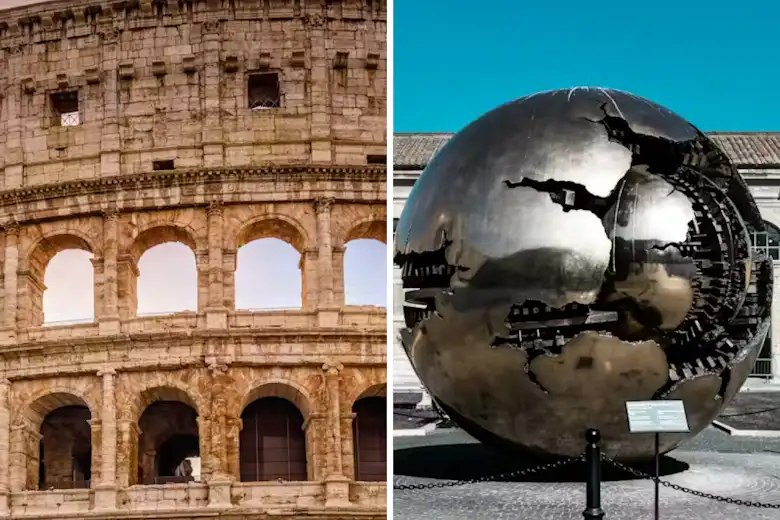
Here's the thing. You've dreamt of Rome. You've seen the photos, and now you're finally here, standing before the Colosseum. But then, reality hits. A queue stretching for ages, threatening to waste half your day. It's a common story. Visiting Rome's biggest attractions like the Colosseum and Vatican Museums can be overwhelming, especially trying to combine them. This isn't just about what to see. It's about navigating Rome in a smart way, sidestepping common mistakes that leave travelers frustrated and out of pocket (this is where most people get it wrong). This guide? It's for first-timers and seasoned travelers alike. We're diving deep into real prices, crucial booking tips, and honest opinions on maximizing your time at these huge sites, even how the included multimedia video can actually make your visit better. You'll learn all the details, from entry fees costing $20-30 per site to the weird logistical stuff that can totally screw up your day.
This post contains affiliate links. If you book through them, I earn a small commission at no extra cost to you - it helps keep this blog running. Thank you!
Fair warning. Ready to start planning? You should use this guide...actually, scratch that - first, look at real-time prices for flights, hotels, and tours to build your itinerary (and yeah, prices fluctuate like crazy). Do this first.
Getting to Rome: Flights, Airport, and Getting Around the City
Real talk: Most international travelers? You'll fly into Rome Fiumicino Airport (FCO). It's Italy's largest, best-connected airport. Flights from major US cities can range from $500 in the deep off-season. Or they can go over $1200 during peak summer. Average? Around $800. Once you land, getting into the city center is super straightforward. Don't fall for unofficial taxi touts inside the terminal, seriously. Head to the official taxi stand outside; that's where the legitimate ones are...actually, no, double-check the signs for your destination. A flat rate of €55 (approximately $59 USD) applies to central Rome destinations, and this covers up to four passengers with luggage (took me by surprise, honestly). Expect the ride to take 30-45 minutes, depending on traffic, so plan for that.
Here's the thing. The Leonardo Express train is the fastest way into the city for most people. It's a non-stop service straight to Roma Termini, the main train station. This trip costs €14 (about $15 USD) one-way and only takes 32 minutes, departing every 15-30 minutes, so you won't ever wait long. If you're staying right near Termini or connecting to another train, this is your absolute best bet. For a cheaper, slower option, there's the regional FL1 train. It's €8 (about $8.60 USD) and stops at other stations like Tiburtina and Trastevere, which might be more convenient, honestly, depending on where you're staying. Three options like SIT Bus Shuttle also run from FCO to Termini for €6-€10 (around $6.50-$11 USD), taking 45-60 minutes, but traffic can make that totally unpredictable (which nobody seems to mention in travel guides).
Let's be honest. Once you're in Rome, you'll rely heavily on public transport. And your own two feet. The Rome Metro has three lines (A, B, C) that connect many key areas and attractions, which is great for covering long distances quickly, but it won't show you the actual city, not the tourist version. A single BIT ticket costs €1.50 (around $1.60 USD) and is valid for 100 minutes on buses, trams, and one metro ride. Daily, 2-day, and 3-day passes are also available if you're planning to use public transport a lot. Rome is best explored on foot. Actually, scratch that - Rome MUST be explored on foot; you'll stumble upon cool little squares, narrow streets, and random ancient stuff you'd totally miss underground or whizzing by on a bus (this is where most people get it wrong). Just make sure you wear comfortable shoes. Those ancient cobblestones are no joke.
| Transport Option (from FCO) | Cost (approx. USD) | Time (approx.) |
|---|---|---|
| Official Taxi | $59 | 30-45 min |
| Leonardo Express Train | $15 | 32 min |
| Regional FL1 Train | $8.60 | 30-40 min |
| Airport Bus Shuttle | $6.50-$11 | 45-60 min (traffic dependent) |
When Is the Best Time to Visit Rome?
The short answer: The absolute best time to hit Rome is during shoulder seasons. That means April-May and September-October. These months give you a perfect mix of mild weather, crowds that you can actually navigate, and plenty of daylight for exploring the city without that crushing summer heat or ridiculous peak season prices, which is a major win (and yes, that's before the tourist markup kicks in).
Fair warning: In spring (April-May), temperatures hover around 60-77°F (15-25°C). That's ideal for walking tours and outdoor sightseeing. You'll see blooming flowers everywhere and enjoy comfortable evenings, which is exactly what you want after a long day of traipsing around ancient ruins. Easter and the surrounding Holy Week can be incredibly busy and expensive, drawing massive crowds, especially to the Vatican. Not kidding. It took me by surprise, honestly. If religious events aren't your primary focus, aim for mid-April or late May to avoid the Easter rush. Or, you know, just don't go during Holy Week.
Here's the thing. Autumn (September-October) is good too. Temperatures are 60-80°F (15-27°C). The light is softer. It's just better for photos. Locals come back from their August breaks then, which makes the city feel like the actual city, not the tourist version. (took me by surprise, honestly). November is totally underrated, though - actually, I think it's one of the best times to go. It's cooler, like 40-60°F (4-15°C). And wetter. But you'll find way fewer people and prices are lower, which is a massive win if you're watching your wallet.
Fair warning. Summer (June-August) is awful. I mean it. Average highs hit 89°F (32°C) in July and August, then regularly climb to 100°F (38°C) with humidity that just crushes you. Places like the Colosseum and Roman Forum? Barely any shade. Exploring midday is just plain miserable. The city does have events, sure, but loads of Romans actually leave for their own vacations in August. That means you'll find random local shops and some restaurants shut down, which nobody seems to mention in travel guides. If you absolutely have to visit then, schedule anything outdoors for 7 AM - 9 AM or 7 PM - 9 PM. Do museums or catacombs when it's hottest. Don't think you can just power through the humidity; it makes 90°F in Rome feel way worse than 90°F somewhere dry. Winter (January-February) is quietest and cheapest. Temperatures are 40-50°F (4-10°C). You'll get short lines. You'll find good accommodation deals. But expect fewer daylight hours and more rain.
Top Things to Do in Rome: Ancient Wonders and Artistic Masterpieces
Real talk: Rome is just packed with history. And art. It's like a giant outdoor exhibit. You could spend, oh, probably three weeks here and still not see even close to everything. But if you're only hitting the big ones - I'm talking Colosseum, Vatican - then here's exactly what you need to know. (this is where most people get it wrong).
The Colosseum, Roman Forum & Palatine Hill
Nobody tells you this: you can't go to Rome and skip the Colosseum. It's a huge amphitheater. They finished it in 80 AD. Gladiators fought there, animals hunted, public spectacles for up to 80,000 people. Just think about the noise. Your ticket usually gets you into the Roman Forum and Palatine Hill too. They're right next to each other. Visit them together. The Roman Forum was the actual city, not the tourist version of public life back then - a big area with government buildings, temples, markets. Walk along the Via Sacra. Try to picture Julius Caesar or Cicero walking on that exact pavement. Above it all, Palatine Hill gives you really good views of the Forum and the Circus Maximus. And it's supposedly where Rome started. Standard tickets for all three? They're usually €18-€24 (that's about $19.50-$26 USD). You HAVE to book a timed entry slot. Do it way ahead, especially during peak season. Seriously, like 30-45 days out. If you just show up without a reservation, you're waiting 2-4 hours. Or worse, you just don't get in at all (which nobody seems to mention in travel guides). Give yourself 3 hours, maybe 3.5, to walk around the Forum and Palatine Hill before your timed Colosseum entry. The best approach is...actually, scratch that - book the skip-the-line ticket first, then figure out the rest. Oh, and limited shade in the Forum. Bring water. And a hat.
Vatican Museums & Sistine Chapel
Here's the thing. The Vatican Museums house one of the world's most extensive art collections. Popes amassed it over centuries, and you'll wander through halls packed with classical sculptures, Renaissance masterpieces, plus ancient Egyptian and Etruscan artifacts. It's a lot to take in, honestly. The grand finale, of course, is the Sistine Chapel. Michelangelo's incredible ceiling frescoes and 'The Last Judgement' are there; they absolutely demand your complete attention. You're not allowed to speak or take photos inside, which, funnily enough, is a total relief from all the constant chatter and clicking (took me by surprise, honestly). Standard skip-the-line tickets for the Vatican Museums and Sistine Chapel start around €20-€26 ($21.70-$28 USD), and you absolutely need to book them well in advance, because showing up without a timed entry ticket is a waste of time, a total mess, and you'll just end up waiting for ages only to find out you can't get in. Plan for a solid 3-4 hours here. Even then, you'll only scratch the surface of its 54 galleries. The museums are closed on Sundays - except the last Sunday of the month, which is free but unbelievably crowded - so you've got to plan accordingly.
Ancient Rome: Multimedia Video Experience
Real talk: Your combined ticket? It often includes a 27-35 minute Ancient Rome Multimedia Video experience. Now, I know what you're thinking: another tourist trap video. But hear me out - actually, scratch that - this isn't some cheesy afterthought; this is where most people get it wrong. Reviews often praise these videos for realistic 3D reconstructions; they help you visualize the ancient sites exactly how they looked 2,000 years ago, which is really important because before you dive into the actual ruins of the Roman Forum, watching this gives you crucial context that makes the crumbling stones make sense, it's seriously like getting a leg up on understanding how big and important these historical marvels actually were. It's a good way to start your day; you'll get it more. Plus, it usually comes with WiFi at the Touristation point. That's always a bonus for travelers.
St. Peter's Basilica
Fair warning. It's not part of the Vatican Museums ticket. But a visit to St. Peter's Basilica? That's a must. And it's free to enter. Yes, free. Just be prepared for security lines, which can still be long, especially in the mornings. This massive church is an impressive sight, an artistic feat, housing Michelangelo's Pietà and the colossal dome he designed. Climbing the dome (Cuppola) offers amazing views of St. Peter's Square and Rome, it's an experience worth doing, but fair warning, it'll cost you an additional €8-€10 (about $8.60-$11 USD) and involves a lot of stairs, like, a surprising amount, even if you take the elevator part-way, you're still climbing, so be ready (which nobody seems to mention in travel guides). Dress code is strict for both the Basilica and the Vatican Museums: shoulders and knees must be covered. Seriously...actually, let's be blunt - they will turn you away if you're not appropriately dressed. Not kidding. Bring a light scarf if you need to cover up quickly.
- Pantheon: Free entry to this former Roman temple, now a church. Go early to beat the crowds and marvel at its incredible oculus. It's a true ancient engineering marvel that still holds up.
- Trevi Fountain: Throw a coin over your shoulder, make a wish, and prepare for crowds. It's free to visit, but don't expect to have it to yourself. Head there very early (before 8 AM) or late at night for a slightly more peaceful experience.
- Borghese Gallery and Museum: Home to stunning sculptures by Bernini and paintings by Caravaggio. Entry is around €13-€15 (about $14-$16 USD), but you must book a timed entry well in advance - often weeks ahead, especially for weekends. This isn't one you can just show up for. It's worth every euro for the art alone.
 The grandeur of St. Peter's Basilica, a highlight near the Vatican Museums.
Where to Stay in Rome: Best Neighborhoods by Budget
Nobody tells you this: Where you stay in Rome? That really impacts your whole trip. Some neighborhoods are perfect for first-timers. Others offer a more local, quieter vibe, basically, the actual city, not the tourist version. Avoid staying too close to Termini Station at night, it's super convenient for transport, no doubt about it, but honestly, some areas around there can feel a bit grittier, kinda sketchy, especially after dark, and you don't want to deal with that on your vacation (seriously, just don't risk it).
- Centro Storico: This is the historic heart of Rome, home to sights like the Pantheon and Piazza Navona. It's ideal for first-timers who want to walk everywhere and be immersed in Roman history. Expect to pay more for accommodation here. Budget hotels start around $120/night, mid-range from $200/night, and luxury can easily exceed $350/night.
- Trastevere: Just across the Tiber River, Trastevere offers a charming, bohemian atmosphere with cobblestone streets, lively nightlife, and endless trattorias. It's great for evenings out and has a slightly more local feel, though it's become quite popular. Budget hostels from $40/night, mid-range B&Bs from $100/night, and boutique hotels from $180/night.
- Monti: Nestled between the Colosseum and Termini, Monti is a trendy, bohemian neighborhood with independent boutiques, wine bars, and excellent street art. It's central but quieter than Centro Storico, offering a good balance for those who appreciate a hip vibe and walking distance to ancient sites. Expect budget stays from $70/night and mid-range hotels from $150/night.
- Prati: Located near the Vatican, Prati is an elegant, residential neighborhood with wide avenues and a more relaxed pace. It's well-connected by metro and often offers better value for money than the hyper-central areas, making it a good choice for families or those seeking quieter evenings. Budget-friendly options from $60/night, mid-range hotels from $130/night, and luxury from $250/night.
Fair warning: Book early. Especially for peak season. You'll want to check Rome accommodation prices on Booking.com at least three to six months out - actually, scratch that, start even earlier if you're aiming for popular spots like Trastevere. That's the only way you're going to secure the actual good spots and decent rates, (this is where most people get it wrong) and if you don't, you'll be stuck with whatever's left and probably overpay for it, honestly.
How Much Does Rome Cost? A Real Daily Budget Breakdown
Let's be honest: Rome isn't cheap. But you can totally make your money work. You'll adjust your spending to fit your budget. Expect typical travelers to drop $241 (€207) per day (and yes, that's before the tourist markup kicks in). Budget travelers can actually get by on $93 (€88) daily, which is pretty tight, honestly. Luxury travelers? They're looking at $658 (€561) or way, way more. It just depends on what kind of trip you're after.
| Category | Budget Traveler (USD/day) | Mid-Range (USD/day) | Luxury (USD/day) |
|---|---|---|---|
| Accommodation | $40-$70 | $100-$200 | $250+ |
| Food | $30-$50 | $60-$100 | $120+ |
| Transport | $5-$10 | $10-$20 | $20-$40+ |
| Activities/Tours | $20-$40 | $50-$90 | $100-$200+ |
| Daily Total | ~$95-$170 | ~$220-$410 | ~$590-$1000+ |
Here's the thing: These estimates are for one person. Food costs? You can totally keep them down. Go for pizza al taglio, that's pizza by the slice. Or get yourself a porchetta sandwich. Grabbing groceries from local markets works too. Eating out in restaurants near major attractions will inflate your budget super fast; actually, scratch that, don't even think about eating right next to the Colosseum unless you enjoy overpaying for mediocre food. Walk two to three blocks away. You'll find way better prices and quality there (which nobody seems to mention in travel guides). For example, a simple espresso might be €1.20 at a local bar, but €4.50 right in Piazza Navona. It's ridiculous. Dining at a mid-range trattoria can run €20-€40 per person for dinner. Street food? Often just €3-€7. Total game changer.
Practical Tips Before You Visit Rome
Real talk: Rome is incredible. But a few insider tips will save you huge headaches and actual cash. First: book everything in advance. Seriously. Not kidding. Major attractions like the Colosseum and Vatican Museums? They sell out. Timed entry is absolutely essential. This isn't a city where you can just show up and expect to walk right in; actually, scratch that, you could show up, but you'll stand in line for hours. Second: always carry a refillable water bottle. Rome has dozens of 'nasoni', those public drinking fountains with fresh, cold water. They're essential for staying hydrated, especially in summer. Don't waste money on bottled water every single hour. Third: be aware of pickpockets. Particularly in crowded areas like the Colosseum, Trevi Fountain, and on public transport (which nobody tells you this, usually). Keep your valuables super secure in a cross-body bag worn on your front. Don't leave your phone on outdoor restaurant tables, ever.
Real talk: The biggest screw-up first-timers make is not realizing how much walking you'll actually do. Rome is massive. Public transport helps, sure. But you're still gonna be on your feet for miles every day. Wear shoes you've already worn in. Seriously. Nobody wants blisters on vacation. Also, don't fall for the 'free' bracelets or roses street vendors offer, they're never free. Dealing with them is just a waste of time. For restaurants, you gotta avoid anything right on the main piazzas. If it has English menus and food pictures outside, it's a rip-off with bad food. Pure and simple. (which nobody seems to mention in travel guides). Instead, Google places 2-3 blocks off the main drag. Or, even better, ask a local where they actually eat. Service in Italy can often feel a bit blunt to Americans; it's rarely personal, just a different culture, so don't take it personally when they don't smile or seem overly chatty with you at dinner.
My Honest Take on Visiting Rome's Top Sites
Here's the thing: You gotta see Rome, especially its ancient bits and the Vatican. It's something you've gotta see for a reason. So much history. World-changing art. It's all there. The package deals combining the Colosseum, Roman Forum, Palatine Hill, and Vatican Museums with a multimedia video? They're actually smart if you're short on time. Actually, scratch that - they're essential if you want to make it easier to get around without losing your mind trying to book tickets for five different places. They save you the pain of booking everything separately. Plus, they usually save you 5-10% compared to buying individual tickets. The multimedia video, in particular, is surprisingly good. It might sound boring, but it actually helps you get the ruins before you see them, took me by surprise, honestly, and it really does make a huge difference to your understanding, making the piles of ancient rocks suddenly come alive in your mind.
Let's be honest: Trying to cram both the Colosseum/Forum and the Vatican into one single day, even with skip-the-line tickets, is an exhausting sprint. Not kidding. Reviews consistently show travelers feel rushed and totally wiped out. While convenient, you're not actually enjoying these places; you're just rushing through them. (this is where most people get it wrong). If you've got 3 or more days in Rome, I strongly recommend splitting these huge sights into two separate days. Give each site the time it needs. If you absolutely only have one day... actually, scratch that, if you absolutely only have one day, you'll have to choose one or the other if you want to enjoy it, but if you insist on both, then these combo tickets are your only way to do it. Just go in knowing it'll be a super long, intense day with 15-20,000 steps minimum. Expect security lines even with skip-the-line tickets. For the actual city, not the tourist version, don't just hit the big sights. Carve out time to wander without a map. Discover a quiet piazza. Enjoy a slow, delicious meal in a local neighborhood. It's in those moments you actually get Rome, understanding why people fall so hard for this city and return again and again to explore its hidden corners. Start planning your trip and compare prices for Rome tours and multi-attraction passes at least 3-4 months ahead.


