
Real talk: Think Rome is just ancient ruins and massive crowds? You're only scratching the surface. This guide cuts through the noise. It's got real prices, honest opinions on everything from hotel costs to the best Tiber River cruises. And, honestly, it highlights the one mistake most first-timers make (this is where most people get it wrong). You'll learn how to navigate entry fees from €5 to €20, which neighborhoods to skip. Also, when the crowds are truly unbearable.
This post contains affiliate links. If you book through them, I earn a small commission at no extra cost to you - it helps keep this blog running. Thank you!
Ready to start planning your Roman adventure? Do this first. You'll want to compare real-time prices for flights, hotels, and experiences. Do it right here (it's that easy). Check availability and book here.
Getting to Rome and Navigating the Eternal City
Fair warning: Landing in Rome? You're probably hitting Fiumicino Airport (FCO). It's the city's main international hub. It sits about 30 kilometers (19 miles) southwest of the city center. Forget expensive taxis - actually, scratch that - only consider them if you've got a literal mountain of luggage or cash to burn. A taxi to central Rome will set you back a fixed rate of €47-€53 (took me by surprise, honestly). Much smarter options exist. Skip it.
Here's the thing. The Leonardo Express train is your best bet for a quick, direct ride into Roma Termini, Rome's main train station. It runs every 15-30 minutes, takes exactly 32 minutes, and costs a flat €14 per adult. It's totally efficient. If your accommodation isn't near Termini, don't just jump on the Express, consider the regional FL1 train. It costs just €8 and stops at other key stations like Trastevere, Ostiense, or Tiburtina, which might be closer to your hotel, saving you a metro transfer (which nobody seems to mention in travel guides). Always check your exact route first, though.
Real talk: Once you're actually in Rome, ATAC runs the public transport system. That means buses, trams, and a pretty tiny but still usable metro system. A single BIT ticket costs €1.50, it's valid for 100 minutes, which lets you do one metro ride or unlimited bus/tram transfers in that time. For longer stays, multi-day passes are definitely the way to go; honestly, don't even think about buying single tickets every day. A 24-hour ticket is €7, a 48-hour is €12.50, and a 72-hour is €18. You can even use contactless credit cards with the "Tap & Go" system on the metro, buses, and trams, it makes getting around ridiculously easy (and yes, that's before the tourist markup kicks in).
| Transport Option from FCO | Cost (approx.) | Time (approx.) |
|---|---|---|
| Leonardo Express Train | €14 ($15) | 32 minutes |
| FL1 Regional Train | €8 ($9) | 30-40 minutes |
| Taxi to City Center | €50 ($54) | 30-60 minutes (traffic dependent) |
| Single Public Transport Ticket (BIT) | €1.50 ($1.60) | 100 minutes (for local use) |
When Is the Best Time to Visit Rome? Avoid the Crowds, Embrace the Charm
The short answer: The absolute best times to hit Rome are during the shoulder seasons of April-May and September-October. That's when the weather is mild, the city feels alive, and the crowds aren't a total mob scene yet, before the peak insanity hits. You'll get comfortable temperatures, usually between 16-23°C (61-73°F), which is perfect for walking miles on those historic streets without sweating through your clothes or freezing your butt off (this is where most people get it wrong). Worth every euro.
Fair warning: Spring brings blooming gardens and cool festivals, like Natale di Roma, that's Rome's birthday on April 21st. Fall? It gives you that nice golden light, significantly fewer tourists after mid-October, and a packed events calendar (the actual city, not the tourist version), plus food just tastes better as locals return from their holidays. But July and August? Just don't. Seriously. The heat is brutal, often soaring into the high 30s°C (90s°F), actually, it's beyond brutal sometimes, honestly. And while some hotels might discount rooms, loads of locals escape the city, which means some smaller, independent shops could be closed (took me by surprise, honestly). The crowds? They're immense, making major attractions feel like a total cattle call.
Fair warning: If you're on a strict budget and don't mind cooler, rainier days, January and February are the cheapest months for Rome. Hotel prices drop significantly then. You'll find lines at popular sites are just shorter, period, a relief, honestly. Winter in Rome's still got its own vibe, though, with festive markets around Christmas and trattorias that feel a bit quieter (which nobody seems to mention in travel guides).
| Season | Months | Average Temp (°C/°F) | Crowd Levels | Why Go |
|---|---|---|---|---|
| Spring | March - May | 16-23°C / 61-73°F | Moderate to High | Mild weather, festivals, blooming gardens |
| Summer | June - August | 28-35°C / 82-95°F | High (Peak) | Long days, lively atmosphere, very hot |
| Autumn | September - October | 17-27°C / 63-81°F | Moderate | Pleasant weather, cultural events, fewer crowds later |
| Winter | November - February | 8-15°C / 46-59°F | Low | Cheaper prices, fewer crowds, festive markets |
Top Things to Do in Rome: The Must-Sees and Hidden Gems
Here's the thing. Rome's basically a giant outdoor museum. You could spend a lifetime just digging into all its history, no exaggeration. But you're not here for a lifetime, are you? So, prioritize your visits, or you'll burn out trying to see everything, this is where most people get it wrong. Here’s what’s actually worth your time, with a few crucial tips.
Colosseum and Roman Forum
Real talk: The Colosseum is Rome. You absolutely can't skip it. This ancient amphitheater? It's mind-blowing ancient engineering (took me by surprise, honestly) where gladiators once battled. Adjacent to it, the Roman Forum and Palatine Hill form a massive old ruin park, the actual heart of ancient Rome. Standing inside the Colosseum makes you feel tiny. Walking the Forum's ruins lets you really picture ancient life. Practical tip: Book your timed-entry tickets online 2-3 weeks in advance, maybe even more, especially during peak season. A standard ticket is €18 and gets you into all three sites. Guided tours make the experience way better, giving you context you'd totally miss otherwise. Seriously, don't just show up expecting to walk right in, it won't happen. Oh, actually, scratch that, book the earliest possible time slot, then figure out your lunch plans. Worth every euro.
Vatican Museums, Sistine Chapel, and St. Peter's Basilica
Nobody tells you this: Vatican City isn't just a part of Rome, it's its own country. And it's packed with masterpieces, like Michelangelo's Sistine Chapel and St. Peter's Basilica. The Vatican Museums hold a massive pile of stuff, from ancient Roman sculptures to Renaissance art. The Sistine Chapel, even with all the crowds, is jaw-dropping, especially if you actually look up (which many people forget to do in the crush). St. Peter's Basilica is free to enter, but you'll hit security lines that can get really long. What makes it special? It's just huge, and the art is insane (and yes, that's before the tourist markup kicks in). Practical tip: Book Vatican Museum tickets online 2-4 weeks in advance (€20 for basic entry). Consider an early access tour if you want to experience the Sistine Chapel with fewer people; it's pricey, usually around €70-€100, but it's totally worth it for those five minutes of quiet. Otherwise, the Sistine Chapel feels packed like sardines, you can barely move. Actually, don't even think about going without a guided tour; you'll spend hours just staring blankly at things and wondering what you're even looking at, which nobody wants after paying for a ticket.
The Pantheon
Here's the thing. The Pantheon? It's an ancient Roman temple, yeah, but now it's a church. Its architecture is remarkably preserved, and that oculus - a huge opening right in the dome - lets in natural light (and sometimes, rain!). What makes it special? It's been standing for nearly 2,000 years, still feels huge, honestly, and the dome's scale is crazy impressive, especially considering when they built it. (took me by surprise, honestly). Practical tip: As of July 2023, you'll pay a €5 entry fee if you're not a resident. Book online; it saves time. Try to go before 9 AM or after 4:30 PM to dodge the mid-day rush, though it's always packed. Seeing it at night, beautifully lit, is pretty great, actually.
Trevi Fountain and Spanish Steps
Let's be honest. These are what you see on every souvenir. The Trevi Fountain is an impressive Baroque fountain, and tossing a coin over your shoulder? That's a tradition for good luck, supposed to bring you back to Rome. The Spanish Steps link Piazza di Spagna with the Trinità dei Monti church, and you get decent views from up there. What makes them special? They're iconic, they're bustling, and they scream big Roman style. Practical tip: Go at dawn. Seriously. If you want a photo without hundreds of people, set your alarm. By 9 AM, both are swarming. (this is where most people get it wrong). They're free to visit, so you can revisit them multiple times if you want to catch them in different light - actually, scratch that - the real good news is you can walk by at 5 AM and have it to yourself.
Tiber River Cruises
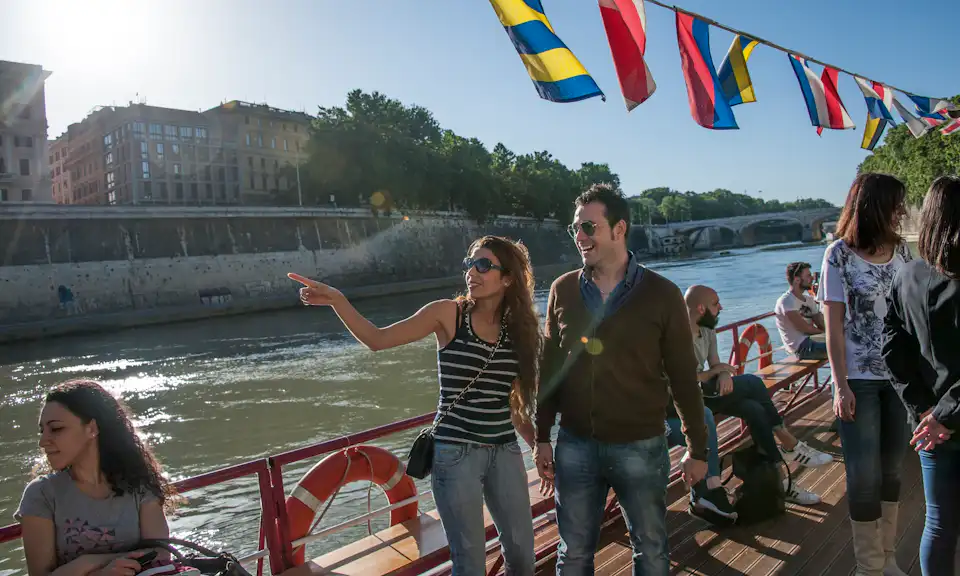
Nobody tells you this: A Tiber River cruise gives you another view of Rome, a break from the constant foot traffic and horn honking. You'll glide past Castel Sant'Angelo, St. Peter's Dome, and the Ponte Sant'Angelo bridge, which is genuinely beautiful. What makes it special? It's a calm way to see the big sights, especially refreshing after you've walked all day. You can pick a hop-on hop-off option to mix sightseeing with transport, or go for a sunset cruise with aperitifs for a good date night. (which nobody seems to mention in travel guides). Practical tip: A 24-hour hop-on hop-off pass typically costs €24-€28 (that's about $26-$30 USD). The hop-on hop-off boat usually runs from April to October and stops right at Tiber Island and Castel Sant'Angelo. Evening cruises with drinks can start from $90-$150, just depends what they include. The bundled tickets offered on the page, like the 'Evening Cruise + Drinks + Colosseum,' can save you money if those are on your list...actually, you should always check if they bundle stuff you actually want.
Trastevere Exploration
Real talk: Across the Tiber River, Trastevere has this old neighborhood vibe, even inside a bustling city like Rome. It's a maze. You get narrow, cobblestone streets, buildings covered in ivy, and lively piazzas everywhere. What makes it special? It's Rome's cool, artsy part of town, known for its vibrant nightlife, actual local restaurants, and craft beer bars. Unlike the monument-heavy historic center, Trastevere is all about the vibe and the food, honestly. Practical tip: Start at Piazza di Santa Maria in Trastevere, which is one of Rome's oldest churches. Come for an aperitivo (pre-dinner drinks and snacks) and stay for dinner. The further you walk from the river, the more local and less touristy it feels. Expect to pay €1.50 for a homemade gelato cup at a place like Bar San Calisto (and yes, that's before the tourist markup kicks in).
- Borghese Gallery and Gardens: An essential for art lovers. Marvel at Bernini and Caravaggio masterpieces. Entry is typically around €13. You absolutely MUST book tickets weeks, sometimes months, in advance for a specific time slot. No walk-ins.
- Castel Sant'Angelo: Once Hadrian's mausoleum, then a papal fortress, now a museum. Offers panoramic views of the Tiber and Vatican. Entry is around €15-20, or you can get a bundled ticket with an audio guide app for about $44.59 from the original page content.
- Food Tour in Testaccio: Skip the bland tourist menus. Testaccio is Rome's culinary soul, known for its traditional Roman cuisine. Expect to pay €70-€100 for a quality food tour.
- Gianicolo Hill: Take a leisurely 20-minute stroll up for one of the best sunset views over Rome - it's completely free and often overlooked by the masses.
- Villa Farnesina: A hidden Renaissance gem in Trastevere, featuring Raphael frescoes. Entry is usually around €12. It's a quiet escape from the crowds.
 The iconic Colosseum, a must-see ancient marvel in Rome.
Where to Stay in Rome: Best Neighborhoods by Budget
Here's the thing. Picking where you sleep in Rome seriously impacts your whole trip. You're looking for easy access, some personality, and a decent price. Every neighborhood has its own feel, and prices can change by €50-€100 per night easily - took me by surprise, honestly. Book early. Especially if you're hitting mid-March to October. Don't wait till the last second.
- Trastevere: Best for nightlife and a charming, local feel. It's walkable to major sights but retains a unique village atmosphere. Budget hostels from $40-70/night, mid-range boutique hotels from $120-200/night.
- Monti: Best for a bohemian vibe and central location, close to the Colosseum and Forum. It's trendy, with artisan shops and cozy restaurants. Budget guesthouses from $60-100/night, mid-range hotels from $150-250/night.
- Centro Storico: Best for being in the heart of it all, steps from the Pantheon and Piazza Navona. It's the most touristy and often the most expensive. Expect luxury hotels from $250-500+/night, with fewer budget options.
- Prati: Best for proximity to the Vatican and a more residential, upscale feel. It's quieter than Centro Storico and has excellent transport links. Mid-range hotels from $100-180/night, with some luxury apartments available.
- Termini Area: Best for budget travelers and extreme convenience to transport (trains, metro, airport links). It's not the most picturesque, and some areas can feel a bit gritty at night. Budget hostels from $30-50/night, mid-range chain hotels from $90-150/night. While convenient, it lacks the charm of other neighborhoods.
Let's be honest. What's your priority? Do you need to walk everywhere, or are you fine saving money on a room and using public transport? Actually, scratch that - the metro and bus lines run constantly. Rome's transport is totally reliable, which nobody seems to mention in travel guides. So don't feel stuck paying top dollar for central spots.
How Much Does Rome Cost? A Real Daily Budget Breakdown
Real talk: Rome can drain your wallet, or it can be pretty affordable. You can eat amazing food here without spending a fortune. But attractions and accommodation? They get expensive quickly. Actually, they're the budget killers, (and yes, that's before the tourist markup kicks in). Here's a realistic look at about €70-€150 daily per person for essentials, assuming you're eating out for lunch and dinner, not cooking everything in a hostel.
| Category | Budget Traveler | Mid-Range | Luxury |
|---|---|---|---|
| Accommodation | $40-70/night | $120-200/night | $250-500+/night |
| Food | $30-50/day (street food, casual trattorias) | $60-100/day (nice dinners, more cafes) | $120-200+/day (fine dining, frequent drinks) |
| Transport | $5-10/day (daily pass, walking) | $5-10/day (daily pass, occasional taxi) | $15-30/day (more taxis, transfers) |
| Activities | $15-30/day (2-3 attractions, some free) | $40-80/day (guided tours, more museums) | $100-200+/day (private tours, experiences) |
| Daily Total | ~$90-160 | ~$225-390 | ~$485-930+ |
Fair warning. These are ballpark figures, not exact. Your biggest cost variable? Accommodation. You can totally slash food bills, though. Grab a pizza al taglio for €3-5. Or a panini for €4-6. Drinking an espresso at the bar costs about €1.20, but sitting down can easily triple that price - this is where most people get it wrong. A proper sit-down meal, maybe with wine, runs €20-40 per person at a decent, non-fancy trattoria. Entry fees for big attractions? Non-negotiable. So you'll have to factor those into your activity budget. Guided tours cost more, sure, but they often save you 27-35 minutes in lines. That's worth it when you've got a 3-day trip. Do this first.
Practical Tips Before You Visit Rome
Fair warning. A little preparation goes a long way in Rome. Don't be that tourist who gets caught out. This is where most people get it wrong, honestly.
- Visa and ETIAS: For US citizens, no visa is currently required for stays up to 90 days within a 180-day period in the Schengen Area. However, from 2025, you'll need to apply for an ETIAS travel authorization, costing around €7. It's similar to the ESTA for the US. Your passport must be valid for at least three months beyond your intended departure and issued within the last 10 years.
- Currency: Italy uses the Euro (€). Always have some small bills for markets, tips, and smaller shops. Credit cards are widely accepted, but cash is king in some places.
- Language: Italian. While many people in tourist areas speak English, learning a few basic phrases (hello, thank you, please, excuse me) goes a long way. Locals appreciate the effort.
- Safety: Rome is generally safe, but pickpockets are rampant, especially in crowded tourist areas like the Colosseum, Trevi Fountain, and on crowded buses. Keep your valuables secure and be aware of your surroundings. Don't carry all your cash or cards in one place.
- Tipping: Tipping isn't mandatory like in the US. Rounding up the bill a few euros at a restaurant is common if service was good. For exceptional service, leaving 5-10% is generous but not expected. Taxis don't require tips, but a small round-up is appreciated.
- Dress Code: When visiting churches, especially the Vatican, ensure your shoulders and knees are covered. Carry a light scarf to quickly cover up if needed. You won't be allowed into St. Peter's Basilica with exposed shoulders.
- Drinking Water: Don't buy bottled water constantly. Rome has free public fountains (nasoni) with fresh, potable water everywhere. Bring a refillable bottle and save money and plastic.
Real talk: What most travelers get wrong? They massively underestimate the walking. Rome? You explore it on foot. Comfortable shoes aren't just an idea, they're non-negotiable. Not kidding. Also, don't fall for those "tourist menu" deals; they're rarely good value, honestly. Walk maybe 2-3 blocks away from the big attractions. You'll find better food, the actual city not the tourist version, at fairer prices - which nobody seems to mention in travel guides.
My Honest Take on Rome
Here's the thing. Rome is a beast of a city. It's chaotic. It's beautiful, overwhelming, and utterly captivating all at once. The pros are obvious: unparalleled history and art around every corner, actually, scratch that - the biggest pro is how you just trip over ancient stuff constantly. Incredible food if you know where to look, and a palpable sense of living history. You'll stumble upon ruins and masterpieces when you least expect them. The sheer density of important sites is staggering, took me by surprise, honestly.
Let's be honest. There are significant cons. The crowds, especially in summer and around major sites, can be crushing and detract from the experience. Actually, forget summer entirely if you can, it's brutal. The heat in July and August is truly stifling. You'll encounter aggressive touts at tourist hotspots. It's easy to fall into tourist traps if you don't do your homework. Pickpockets are a real concern, and yes, that's before the tourist markup kicks in. Rome isn't always polished; it's a gritty, working city underneath all that ancient grandeur.
Real talk: Who's gonna love Rome? People into history, art, and food. You can't mind a challenge. Willing to wake up early, research your meals, embrace the chaos? Rome's gonna reward you big time. Who'll hate it? Anyone wanting a pristine, perfectly organized, quiet city. Most visitors are stunned by the sheer amount of walking (took me by surprise, honestly) and how much bigger everything feels in person; it's not like the postcards where everything looks manageable and close together, nope, your feet will ache by day two. Go. But go prepared. Seriously, consider the Tiber River cruise for a moment of peace in the Roman whirlwind.


