
Amsterdam has 10 tourists for every resident. The city is actively running a campaign telling certain visitors to stay away - and yet the things to do in Amsterdam that are actually worth the trip are still there if you know how to access them. The Anne Frank House sells out weeks ahead at €16 per ticket. The Van Gogh Museum requires timed entry at €22. Most visitors who show up without pre-booked tickets spend half their first day waiting in queues or being turned away entirely. This guide is about avoiding that and actually seeing the city.
This post contains affiliate links. If you book through them, I earn a small commission at no extra cost to you - it helps keep this blog running. Thank you!
Before you read the rest of this, check availability. Compare Amsterdam tours and attraction tickets before you finalize dates - the Anne Frank House and Van Gogh Museum specifically book out weeks in advance during spring and summer.
Getting to Amsterdam and Getting Around the City
Amsterdam Schiphol Airport (AMS) is 18 kilometers from the city center and connected to Amsterdam Centraal station by direct train. This is one of the most straightforward airport-to-city connections in Europe.
| Transport Option | Cost | Journey Time | Notes |
|---|---|---|---|
| Train to Centraal | €5.40 | 17 minutes | Every 10-15 min, direct |
| Bus (line 397) | €5-€7 | 30-40 minutes | Good if staying near Leidseplein |
| Official taxi | €35-€45 | 25-45 minutes | Meter, traffic-dependent |
| Private transfer | From €45 | 25-45 minutes | Best for groups with luggage |
The train is the obvious choice. €5.40, 17 minutes, runs every 10-15 minutes around the clock. There is no reason to take a taxi unless you have an extraordinary amount of luggage or you arrive at 4am and the trains are not running.
Inside Amsterdam, the GVB tram and metro network covers everything relevant. A 1-day pass costs €10, a 3-day pass €21.50, a 7-day pass €43. If you're planning to take public transport more than 4 times per day, the day pass makes financial sense over single tickets.
The I Amsterdam City Card combines unlimited public transport with free entry to 70+ attractions including the Rijksmuseum (€22.50 alone) and ARTIS Zoo (€32.50 alone). It costs €67 for 24 hours and €94 for 48 hours. Do the math on what you plan to visit before buying - it only saves money if you're doing 3 or more paid attractions in a single day.
Real talk: Amsterdam is extremely bike-friendly. A day rental runs €12-€18. If you are comfortable cycling in a city and confident about navigating bike lanes (they are serious about the lanes here - pedestrians in the bike lane get no sympathy), renting a bike for one day and cycling the canal ring is one of the better things you can do in Amsterdam.
When Is the Best Time to Visit Amsterdam?
April and May are the best months to visit Amsterdam, full stop. The tulip fields around the city are in bloom, Keukenhof is open (March 20 to May 11 only), temperatures are comfortable at 12-18°C (54-64°F), and the city looks its best. Hotel rates in April run 25-30% below July-August peak.
Important: Keukenhof - the tulip garden that appears in every Amsterdam photo roundup - is only open for roughly 8 weeks per year, from late March to mid-May. If you're visiting outside this window, it does not exist as a tourist destination. Stop including it in your itinerary if you're going in September.
September and October are the second-best window. Temperatures drop to 12-17°C, the summer crowds have cleared, and hotel rates fall 20-30%. The canal light changes in autumn in a way that summer doesn't replicate.
July and August are the most-visited months. Budget accommodation fills up months in advance, canal cruise queues stretch to 45 minutes, and the Red Light District tourist density becomes genuinely unpleasant. Temperatures are mild (20-22°C) but the crowds make the city feel smaller than it is. Winter rates drop 35-50% compared to summer - January and February are cold but significantly cheaper and less chaotic.
Top Things to Do in Amsterdam: What Is Worth Your Time
Amsterdam's major attractions are genuinely good. The problem is most of them require advance booking and most visitors arrive without having done it. Here's what to book before you fly and what you can leave until you arrive.
Van Gogh Museum
The Van Gogh Museum holds the largest collection of Van Gogh's work in the world - more than 200 paintings, 500 drawings, and 700 letters. Standard entry costs €22, or €27 through Tiqets which includes skip-the-line access. Book your Van Gogh Museum tickets in advance - same-day entry is rarely available in spring and summer.
Budget 2-3 hours. The permanent collection is on multiple floors and the temporary exhibitions change regularly. The building itself is good but the art is the point. Go in the morning - the museum opens at 9am and the first hour is significantly less crowded than midday.
Rijksmuseum
The Rijksmuseum is the national museum of the Netherlands and holds Rembrandt's Night Watch, Vermeer's The Milkmaid, and one of the most complete collections of Dutch Golden Age art anywhere. Entry costs €22.50. Timed entry slots are required - book online.
Most people try to do the Rijksmuseum and the Van Gogh in the same half-day. Both are on Museumplein and walking distance from each other. That is doable but rushed - budget 2 full hours for each if you want to do them properly.
Anne Frank House
The Anne Frank House is one of the most visited sites in Amsterdam and one of the most important. Entry costs €16. Timed tickets sell out weeks ahead in spring and summer - this is not an exaggeration. The official site sells out fast and resellers charge €40-€60 for the same €16 ticket.
Book through the official site only at annefrank.org. Buy your tickets the moment you book flights. The queue without a ticket is not a viable alternative - it moves slowly and is not guaranteed entry.
Amsterdam Canal Cruise
A canal cruise is one of the few Amsterdam tourist activities that genuinely delivers. The canal ring is a UNESCO World Heritage site and seeing it from the water gives a perspective you cannot get on foot. Prices start at €12.14 for a basic 1-hour cruise. Guided tours run €15-€25.
The evening cruises are worth the premium if you can manage the schedule - the canal houses lit up after dark are one of those experiences that lands better in person than in any photo. Evening cruise tickets run €18-€30.
Jordaan Neighborhood Walk
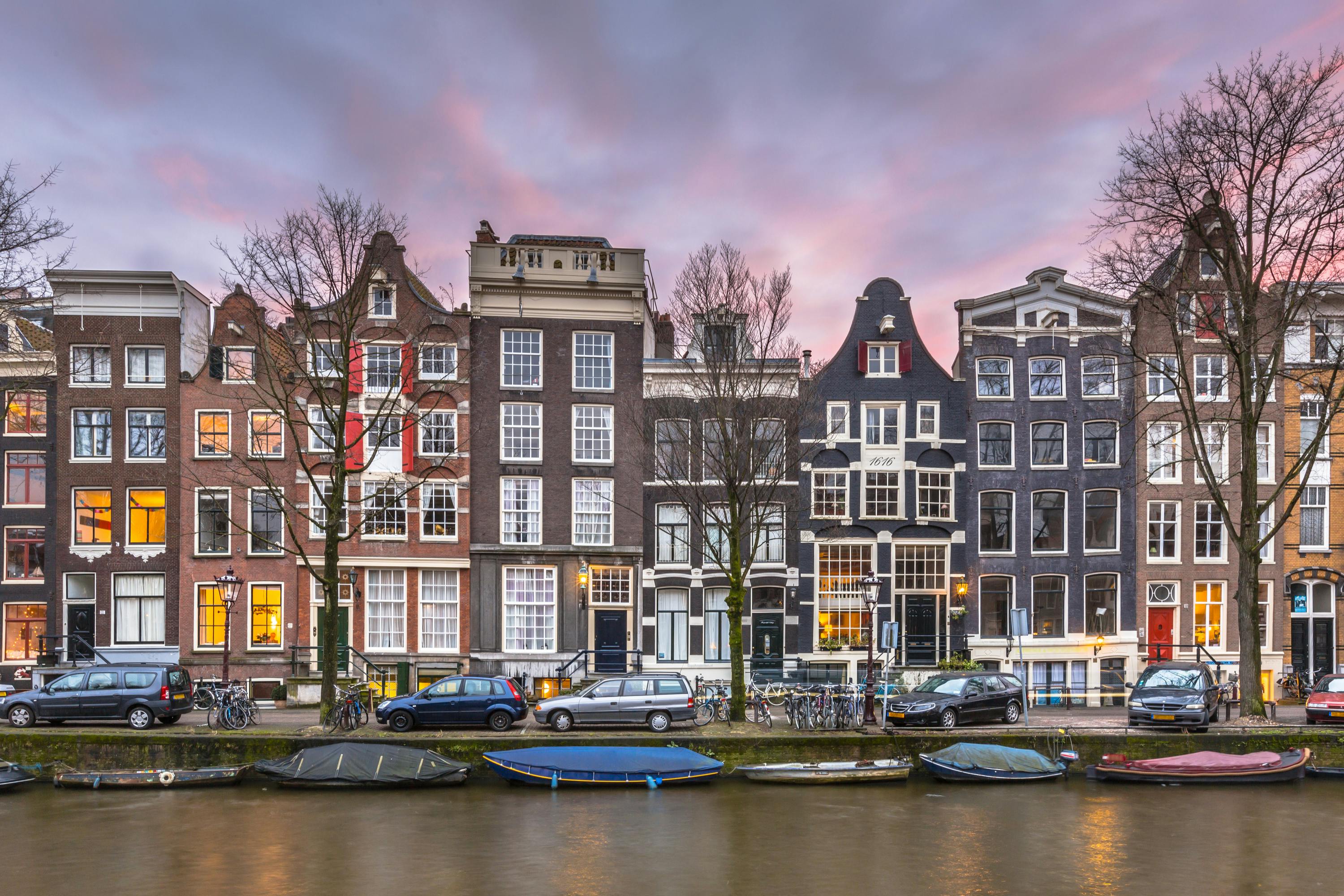
The Jordaan is the best neighborhood in Amsterdam for a slow morning walk. The 17th-century canal houses, the small independent shops, the hofjes (hidden courtyards accessible through unmarked doors) - this is what Amsterdam looked like before mass tourism. It is still largely intact.
Go on a Tuesday or Wednesday morning before 10am. The area is genuinely quiet, the coffee shops are open, and you can walk the canals without constant foot traffic. Noordermarkt on Saturday morning is good but crowded - the organic market at the back is worth the crowd, the cheese vendors less so.
Moco Museum
The Moco Museum houses Banksy, Warhol, and rotating contemporary art exhibitions in a 1904 villa on Museumplein. Entry costs €21.56 on Tiqets (10% off the door price). It's smaller than the Rijksmuseum and Van Gogh - budget 90 minutes. Worth it if contemporary art is your thing, skippable if you're prioritizing the Golden Age collections.
Where to Stay in Amsterdam: Best Neighborhoods by Budget
Amsterdam is a compact city but neighborhood choice still matters for how much you're walking versus taking trams.
- Jordaan: The best all-around neighborhood for first-time visitors. Authentic Amsterdam feel, genuinely good cafes and restaurants, close to the Anne Frank House and the Canal Ring. Mid-range hotels run €180-€280/night.
- Canal Ring (Grachtengordel): Maximum atmosphere. Walking distance to virtually everything including Centraal Station and all major museums. Noisy in summer, expensive year-round. Hotels run €220-€400/night.
- De Pijp: More affordable and more local. Albert Cuyp Market, good independent dining scene, easy tram access to Museumplein. Budget hotels run €90-€140/night, mid-range €160-€240/night.
- Oud-West: Vondelpark on your doorstep, good local food scene, quieter than the Canal Ring. Hotel rates run €120-€220/night. A slightly longer walk to the center but trams cover the gap well.
Book as early as possible for April and May. Amsterdam accommodation fills up for tulip season 3-4 months ahead and the price increases are significant as availability tightens.
How Much Does Amsterdam Cost? A Real Daily Budget Breakdown
| Category | Budget Traveler | Mid-Range | Luxury |
|---|---|---|---|
| Accommodation | €35-€90/night | €180-€280/night | €320-€550/night |
| Food | €25-€40/day | €60-€100/day | €150+/day |
| Transport | €8-€12/day | €10-€20/day | €25-€50/day |
| Attractions | €15-€25/day | €40-€70/day | €80-€140/day |
| Daily Total | ~€80-€130 | ~€220-€350 | €500-€800+ |
Dutch street food is legitimately cheap. Herring with onions from a street cart costs €4-€5. Frites (fries) with Dutch mayonnaise run €4-€6. A stroopwafel fresh from a market stall is €3-€5. These are worth doing on their own merits, not just as budget options.
Sit-down lunch at a local brown cafe (bruine kroeg) with a sandwich and a beer runs €12-€18. The same lunch at a tourist restaurant near the museums costs €25-€35. Walk one or two streets off the main tourist circuit and prices drop significantly.
Practical Tips Before You Visit Amsterdam
Book everything before you arrive: This is more important in Amsterdam than in most European cities. The Anne Frank House, Van Gogh Museum, and Rijksmuseum all require timed entry tickets booked online. Walk-ups are frequently turned away. Book through official sites and book early.
Red Light District rules: Photography of sex workers or their windows is strictly prohibited and violators regularly have phones thrown into the canal. A public cannabis smoking ban is in effect throughout the district. Alcohol in public spaces carries a €95 fine. Guided group tours of more than 4 people are also banned. These are enforced, not suggestions.
Bikes and pedestrians: The bike lanes in Amsterdam are taken seriously. Pedestrians walking in bike lanes are not treated kindly by cyclists. Stay on the sidewalk, look both ways before crossing any lane, and never stand in a bike lane to take a photo.
Pickpocketing: Lower risk than Barcelona or Rome but still present. The Red Light District, Centraal Station, and crowded trams are the main problem areas. Standard precautions apply - front pockets, bag in front.
Visa: EU citizens need no visa. US and most non-EU nationals need ETIAS from 2025 onwards - €7, valid 3 years, apply online before travel. The Netherlands uses euros.
My Honest Take on Amsterdam
Amsterdam is one of the most complete city breaks in Europe. The museum density is extraordinary for the city's size, the canal architecture is genuinely unlike any other city in the world, the food scene outside the tourist corridor is consistently good, and the logistics of getting around are as easy as a European city gets.
The honest downside: Amsterdam is fighting overtourism in a way that is starting to affect the visitor experience itself. The city's active campaign to reduce certain types of tourist behavior, the stricter regulations in the Red Light District, the packed museum queues - these reflect a city under genuine strain from visitor numbers.
Go in April for the tulips or in October for the quiet. Book the Anne Frank House and Van Gogh Museum before you fly. Stay in the Jordaan. Rent a bike for one day. Eat herring from a street cart. Amsterdam rewards visitors who treat it like a real city rather than a theme park - which is exactly what the locals are asking for.


