
Barcelona had 26 million visitors in 2025. That is 15 times the city's population. The things to do in Barcelona that are actually worth your time get harder to access every year, and the things that are traps get harder to avoid. This guide is built around specific answers: Sagrada Familia costs €26 for the cathedral only and €36 if you want the towers - and why the towers matter. Which neighborhood gives you the best base without putting you in the middle of a pickpocket corridor. Why La Rambla is not worth more than one walk-through. Whether you have 3 days or 5, here is what to prioritize and where most first-timers waste their time.
This post contains affiliate links. If you book through them, I earn a small commission at no extra cost to you - it helps keep this blog running. Thank you!
Check availability first. Browse Barcelona tours and attraction tickets before reading the rest - Sagrada Familia timed slots sell out weeks ahead in spring and summer, and nothing on this list changes that fact.
Getting to Barcelona and Getting Around the City
Barcelona El Prat Airport (BCN) is 12 kilometers from the city center. You have four realistic options for getting in.
| Transport Option | Cost | Journey Time | Notes |
|---|---|---|---|
| Aerobus (express bus) | €6.75 one-way | 35 minutes | Direct to Placa de Catalunya |
| Metro L9 Sud | €5.50 | 40-50 minutes | Requires a connection at Zona Universitaria |
| RENFE train (R2 Nord) | €4.60 | 25-30 minutes | Connects Passeig de Gracia and Clot |
| Official taxi | €35-€45 | 20-40 minutes | Traffic-dependent, metered |
| Private transfer | From €45 | 20-40 minutes | Best for groups with heavy luggage |
The RENFE train is underused and genuinely the best option if you're staying near Passeig de Gracia or the Eixample. €4.60, 25 minutes, no traffic. The Aerobus is slightly more expensive and slower but drops you right at Placa de Catalunya. Skip the Metro L9 - the connection is annoying and it costs more than the train.
Inside the city, the metro is excellent. A single journey costs €2.40. A T-Casual card (10 trips) costs €12.15, which brings the per-trip cost down to €1.22 - a 49% saving per ride. If you're staying more than 2 days and plan to use public transport, the T-Casual is an automatic buy. Multi-day unlimited passes start at €16.30 for 2 days.
The hop-on hop-off bus costs €30-€33 and is genuinely useful here - Barcelona's sights are more spread out than people expect, and the bus hits Sagrada Familia, Park Guell, Camp Nou, and the waterfront in one circuit. Not embarrassing to use. Just don't use it as your only transport.
When Is the Best Time to Visit Barcelona?
April, May, and late September through October are the best months to visit Barcelona. Temperatures sit at 18-23°C (65-74°F), hotel rates run 25-35% below the summer peak, and the crowds at Sagrada Familia are manageable rather than crushing.
July and August are the most-visited months. Temperatures hit 28-31°C (82-88°F), the beaches are packed, and Barceloneta turns into a full-contact sport. Hotels in Eixample push past €300/night for anything decent. La Rambla in August at noon is something most people who have done it describe as a lesson they will not repeat.
November through February is genuinely underrated. Temperatures drop to 10-15°C but nothing closes, everything is cheaper, and the Sagrada Familia interior has fewer people to block the light through the stained glass - which is the entire point of visiting.
One specific note: La Merce festival runs in late September and turns the city into one large outdoor celebration. Free concerts, fire runs, and the city at its most animated. The crowds during La Merce are significant but worth it if you plan around them.
Top Things to Do in Barcelona: The Real List
Barcelona's reputation rests almost entirely on Gaudi's work. That's mostly deserved. Here's what's worth your time and what gets skipped by anyone who's been more than once.
Sagrada Familia
The Sagrada Familia is the most extraordinary building in Barcelona and, for many visitors, Europe. Construction started in 1882 and is expected to complete around 2026. The interior during morning light through the stained glass is one of those experiences that is hard to describe and easy to underestimate from photographs.
The base ticket for the cathedral only costs €26. Add the towers for €36 - the Nativity Tower gives the closest thing to an aerial view of the city you'll find without a helicopter. Book your Sagrada Familia skip-the-line tickets at least 3 weeks ahead in spring and summer. Go at 9am on a weekday morning. The light is different, the crowds are a fraction of what they are at noon, and you can actually stand still inside.
The audio guide is included with all tickets via the app. The guided tour is €4 extra. Do the guided tour. The symbolism built into every element of the building is not obvious without explanation, and understanding it changes what you're looking at entirely.
Park Guell
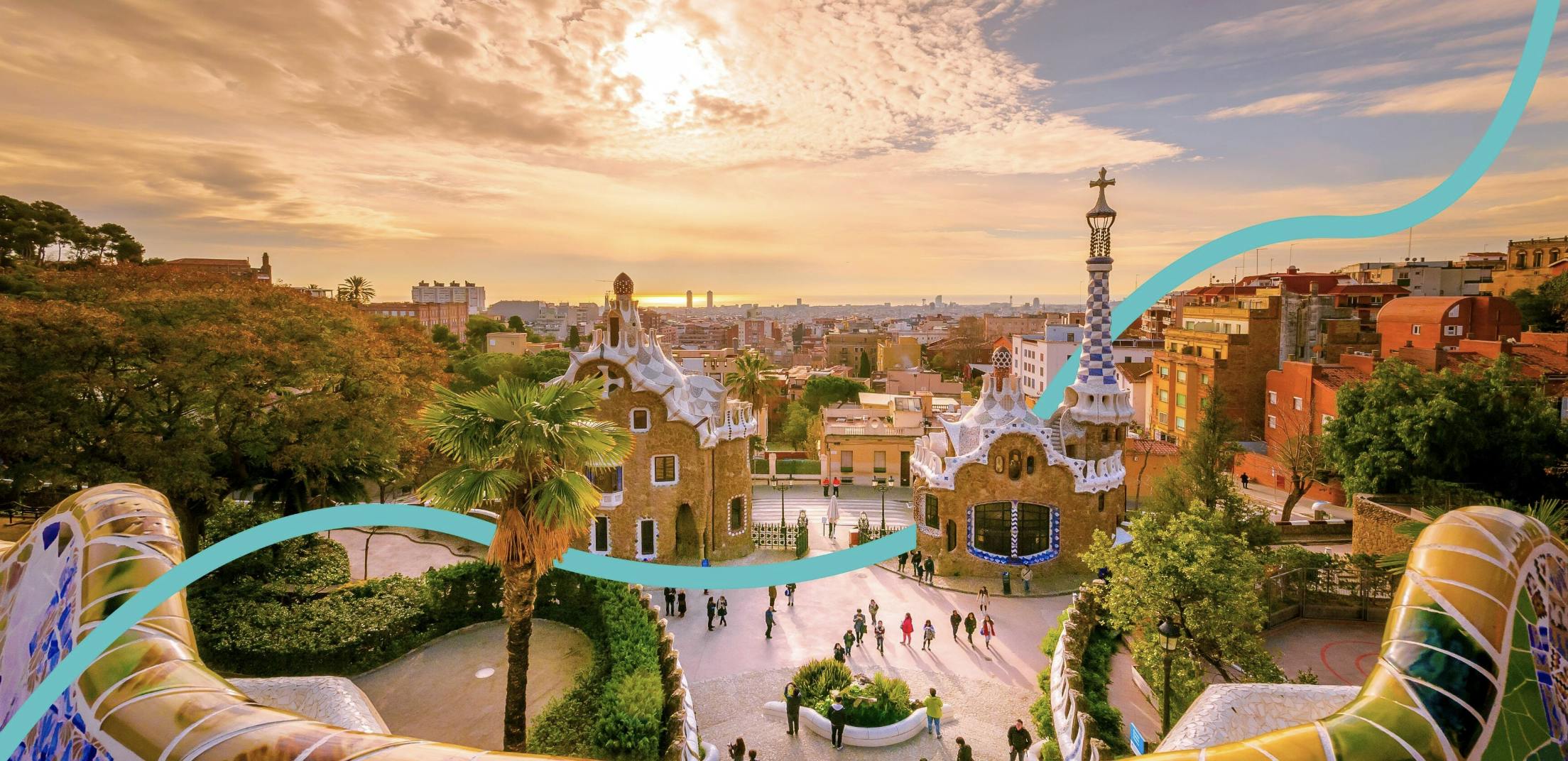
Park Guell has two zones: the ticketed monumental zone with the famous mosaic terrace and Gaudi's architectural elements (€18 standard, €27 guided tour), and the free park surrounding it. Most of the hype is about the ticketed terrace. The views from the free zone just outside the entrance are nearly identical.
Fair warning: the ticketed zone is genuinely impressive and Gaudi's dragon staircase and the hypostyle hall are worth seeing up close. But if you're on a tight budget, the free park area delivers 80% of the experience at 0% of the cost. Worth knowing before you buy.
Timed entry is required for the ticketed zone. Book in advance. The early morning slot (8am opening) has the fewest people and the best light for photos.
Casa Batllo and Casa Mila (La Pedrera)
These two buildings are on the same street (Passeig de Gracia) and together represent Gaudi's work in the domestic architecture space. Casa Batllo evening entry runs €29 and includes a light show on the facade - theatrical, genuinely impressive, and worth seeing once. Casa Mila runs €25-€30 for daytime entry and the rooftop with its warrior chimney stacks is worth the price of admission on its own.
Most people try to do both in one day. That's possible but exhausting. If you have to choose, Casa Batllo for the experience and the interior, Casa Mila for the rooftop and the Gaudi exhibition inside.
The Gothic Quarter
The Gothic Quarter is the best part of Barcelona. Get there before 9am or you're sharing it with 500 strangers. The Roman walls, the Barcelona Cathedral, the narrow medieval alleys - it earns every word written about it. After 10am on a weekend in summer, it becomes what it is: a tourist maze.
The Barcelona Cathedral itself is free on weekday mornings before 12:30pm. Entry otherwise costs €9. The cloister with its 13 white geese is one of those details that does not make it into many guides but is worth 10 minutes of your time.
La Rambla - Walk Through It Once and Then Ignore It
La Rambla is the most famous street in Barcelona. Walk it once to say you did. Then stop going there. The street itself is pleasant for about 5 minutes. The restaurants on either side are overpriced, the human statues demand money for photos, and the shell game operators with their organized rings of shills and lookouts are the most concentrated pickpocket operation in the city.
The shell games on La Rambla are not street gambling. Every person who appears to be a bystander or a winning player is part of the operation. No tourist has ever beaten one. Do not stop. Do not watch.
Barceloneta Beach
The beach is free. The sand is clean. The water in September and October is warm (22-24°C). In July and August, Barceloneta is one of the most crowded urban beaches in Europe and bag theft is consistent - Booking data and police statistics both show beach theft peaks in July and August with over 1,000 reported incidents per month.
If you go to the beach: leave your passport and valuables at the hotel. Never leave bags unattended, not even for 30 seconds to swim. This is not overcautious - it is the practical reality of a beach that gets 50,000+ visitors on a summer day.
Where to Stay in Barcelona: Best Neighborhoods by Budget
Where you stay in Barcelona determines how much of your day you spend commuting versus exploring. The city is large enough that neighborhood choice matters.
- Eixample: The best base for first-time visitors. Wide avenues, genuinely safe, and close to Sagrada Familia, Casa Batllo, and Casa Mila. Less chaotic than the Gothic Quarter. Mid-range hotels run €180-€350/night. The Right Eixample is quieter and more residential; the Left has more of a local nightlife scene.
- Gothic Quarter (Barri Gotic): Maximum atmosphere, maximum tourist density. The medieval streets are genuinely impressive and you're close to everything. But pickpockets are more active here than anywhere else in the city, and noise continues until 3am on weekends. Budget hotels run €85-€180/night.
- Gracia: The most local-feeling neighborhood on this list. Bohemian, quieter than the center, genuinely good independent restaurants. The trade-off is a longer metro or walk to most major attractions. Hotels here run €100-€200/night and availability is better.
- El Born: Between the Gothic Quarter and the beach. Good mid-range restaurant scene, Picasso Museum access, slightly calmer than the Gothic. Mid-range hotels run €150-€280/night.
Note: Barcelona has significantly reduced short-term rental licenses since 2024. Airbnb supply in the city is much lower than in previous years. Book hotels rather than apartments for 2026 - availability is easier to manage and cancellation policies are clearer.
How Much Does Barcelona Cost? A Real Daily Budget Breakdown
| Category | Budget Traveler | Mid-Range | Luxury |
|---|---|---|---|
| Accommodation | €40-€85/night | €180-€350/night | €400-€900+/night |
| Food | €20-€35/day | €50-€90/day | €120+/day |
| Transport | €5-€12/day | €12-€25/day | €30-€60/day |
| Attractions | €15-€30/day | €40-€80/day | €80-€150/day |
| Daily Total | ~€80-€130 | ~€200-€300 | €500-€900+ |
The Menu del Dia is the best budget hack in Barcelona. Most restaurants in non-tourist areas serve a fixed 3-course lunch with bread and a drink for €12-€19. The same meal ordered from the dinner menu costs €40-€60. Eat your main meal at lunch, grab something lighter in the evening.
Tourist tax: Barcelona charges €5.70 per person per night at 4-star hotels (increasing further from April 2026). Factor this into your accommodation budget - it's not optional and is not always included in the advertised rate.
Practical Tips Before You Visit Barcelona
Pickpockets: Barcelona consistently ranks among the top cities in Europe for pickpocketing. La Rambla, the Gothic Quarter, Barceloneta beach, and the metro are the main risk areas. Use a front-facing bag or money belt in these areas, keep your phone in your front pocket, and leave your passport locked in the hotel safe every single day.
Restaurant scams: Check the menu price before sitting down. Restaurants near La Rambla and the Gothic Quarter regularly add charges for bread you didn't order (pan y servicio), terrace surcharges not shown on the menu, and 'cover charges' invented on the bill. Ask to see the menu and check your bill before paying.
Visa and ETIAS: EU citizens need no visa. US and most non-EU visitors need ETIAS authorization from 2025 onwards - €7, valid 3 years, apply online. Spain uses euros. Cards are accepted almost everywhere but carry €20-€30 cash for markets, smaller cafes, and cab situations.
Language: Barcelona is bilingual - Catalan and Spanish are both official languages. Most service industry staff speak English in tourist areas. Learning 3-4 words of Catalan (gracies = thank you, bon dia = good morning) is noticed and genuinely appreciated.
Overtourism protests: Anti-tourism sentiment is real in Barcelona in 2026. You may see graffiti or occasional protests. This does not affect your safety as a visitor, but being a considerate tourist - keeping noise down in residential areas, not blocking narrow streets for photos, respecting the neighborhoods you're in - matters more here than in most cities.
My Honest Take on Barcelona
Barcelona is one of the best cities in Europe. The Gaudi architecture is genuinely unlike anything else in the world, the food scene outside the tourist corridors is excellent, and the combination of city and beach is something very few places can offer. The weather in spring and autumn is close to perfect.
The honest downside: the overtourism problem is real and worsening. 26 million visitors in a city of 1.7 million residents means that some of what makes Barcelona special is getting harder to access without crowds. The pickpocketing statistics are not overblown - they are among the highest in Europe and the organized nature of the gangs on La Rambla makes casual vigilance insufficient.
Go in April, May, or October. Book Sagrada Familia and Park Guell before you fly. Stay in Eixample. Eat lunch as your main meal. Skip La Rambla after your first walk-through. Those 5 decisions make Barcelona a very good trip.


