
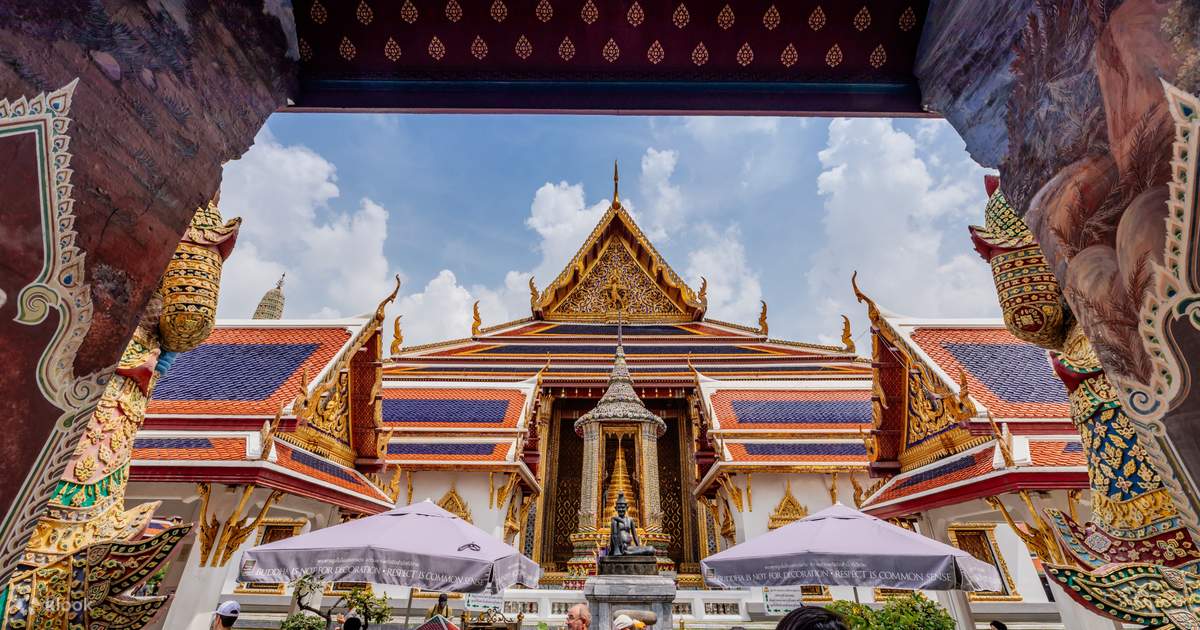
Bangkok's Grand Palace: A Living Symbol of Thai Civilization
The Grand Palace in Bangkok stands as one of the most significant architectural and cultural landmarks in all of Southeast Asia. Built in 1782 when King Rama I moved the capital from Thonburi to Bangkok, this vast complex served as the official royal residence for generations of Thai monarchs and remains an active ceremonial venue to this day. Covering an area of over 218,000 square meters, the compound brings together palaces, temples, throne halls, and ceremonial buildings that together represent the pinnacle of Thai artistry and craftsmanship across several centuries of development.
Visiting the Grand Palace is widely considered one of the top things to do in Thailand, and for good reason. The compound contains Wat Phra Kaeo, the Temple of the Emerald Buddha, which houses Thailand's most revered religious icon. Booking a Grand Palace half-day walking tour on Klook ensures you have a knowledgeable guide to explain the religious significance, historical context, and architectural details that would otherwise be easy to miss on a self-guided walk.
History and Historical Significance
King Rama I ordered construction of the palace complex immediately after establishing Bangkok as the new Thai capital in 1782. The original buildings followed the architectural traditions of the former capital Ayutthaya, and successive kings added new structures, expanded existing halls, and refined decorative elements over the following two centuries. By the reign of Rama IV in the mid-1800s, the palace had grown into a sprawling complex that blended traditional Thai design with European neoclassical influences, reflecting the country's careful navigation of the colonial era.
The Chakri Maha Prasat Throne Hall, completed in 1882 under Rama V, exemplifies this cultural fusion. Its lower floors follow Italian Renaissance proportions while the roof is distinctly Thai, topped with a traditional multi-tiered spire. This building served as the main reception hall where foreign dignitaries were received, and it remains one of the most photographed structures within the compound today. The palace complex as a whole tells the story of Thailand's history through its architecture, making each building a chapter in a long national narrative.
Wat Phra Kaeo and the Emerald Buddha
The Temple of the Emerald Buddha sits at the heart of the Grand Palace compound and is considered the most sacred Buddhist temple in Thailand. The Emerald Buddha itself is a statue carved from a single block of green jade approximately 66 centimeters tall. Despite its relatively modest size, the statue holds enormous religious importance and has been the palladium of the Thai kingdom since it was installed here by Rama I in 1784. Three times each year, during the hot, rainy, and cool seasons, the king himself changes the statue's golden seasonal robe in a royal ceremony.
The temple walls are covered with intricate murals depicting scenes from the Ramakien, the Thai version of the Indian Ramayana epic. These murals were originally painted in the late 18th century and have been restored multiple times since. The detail and scale of the artwork is extraordinary, spanning the entire inner perimeter of the temple compound and telling a complete mythological narrative in visual form. Photography inside the main temple building where the Emerald Buddha is kept is not permitted, but you can photograph extensively in the surrounding courtyards.
What to Expect on a Guided Half-Day Tour
A guided half-day walking tour of the Grand Palace typically lasts three to four hours and covers the main accessible areas of the compound. Your guide will start at the entrance gates and walk you through the Outer Court, explaining the function of each building, before proceeding to the Middle Court where the throne halls are located, and finally to the Temple of the Emerald Buddha. Book your Grand Palace tour through Klook to secure entry tickets, an English-speaking guide, and often hotel pick-up or meeting point instructions all in one booking.
The tour usually includes the Chakri Maha Prasat Throne Hall, the Dusit Maha Prasat Throne Hall, and the Boromabiman Hall. Your guide will explain the purpose of each structure and share stories about the royal ceremonies held there. The Emerald Buddha temple visit is typically the tour highlight, with your guide providing context about the statue's history and the religious practices observed there. Many tours also include a brief stop at the Coins and Decorations Museum within the compound, which displays royal regalia and ceremonial objects.
Dress code is strictly enforced at the Grand Palace. Both men and women must cover their shoulders and knees before entering. Sarongs are available for rent or loan at the entrance for visitors who arrive in shorts or sleeveless clothing, but wearing appropriate attire beforehand saves time and avoids discomfort in the heat. Comfortable closed or open-toe shoes are recommended as you will be walking considerable distances on stone and marble surfaces.
| Tour Type | Duration | Includes | Typical Price |
|---|---|---|---|
| Half-Day Walking Tour | 3-4 hours | Guide, entry ticket, hotel pick-up | USD 25-45 |
| Self-Entry Ticket | Unlimited | Entry only, no guide | 500 THB (~USD 14) |
| Combined Grand Palace + Wat Pho | 4-5 hours | Both sites, guide | USD 35-55 |
| Private Guided Tour | 3-4 hours | Dedicated guide, flexible pace | USD 60-90 |
Practical Tips for Your Visit
The Grand Palace gets extremely busy from mid-morning onwards, particularly on weekends and Thai public holidays. Arriving at opening time, which is 8:30 AM, gives you the best chance of exploring the main areas without large crowds. The complex closes at 3:30 PM for visitors, with the last entry at 3:00 PM, so plan your arrival accordingly. The busiest months are November through February during the cooler dry season, which coincides with peak tourist season across Thailand.
Bringing water is essential as the grounds are largely open to the sun and Bangkok's heat can be draining. There are food stalls and vendors just outside the palace grounds on Na Phra Lan Road. If you plan to continue to Wat Pho Temple, which is only a short walk away, factor in an additional one to two hours. The nearby Ayutthaya temples day trip is a great option if you want to see more of Thailand's royal history, though that requires a full day.
- Wear modest clothing covering shoulders and knees
- Arrive by 8:30 AM to avoid peak crowds
- Bring small denomination Thai baht for donations and stalls
- Wear comfortable walking shoes suitable for uneven surfaces
- Carry sunscreen and a hat as most areas are open-air
- Avoid visiting on Thai public holidays when crowds are largest
- Photography is allowed everywhere except inside the Emerald Buddha chapel
| Info | Details |
|---|---|
| Opening Hours | 8:30 AM - 3:30 PM daily |
| Entry Fee | 500 THB (includes Grand Palace and Wat Phra Kaeo) |
| Address | Na Phra Lan Rd, Phra Borom Maha Ratchawang, Bangkok |
| Getting There | Chao Phraya River Express to Tha Chang Pier (N9) |
| Dress Code | Shoulders and knees must be covered |
| Photography | Allowed outside; no photos inside Emerald Buddha chapel |
Best Time to Visit Bangkok
Bangkok has three seasons: cool and dry from November to February, hot from March to May, and rainy from June to October. For visiting the Grand Palace and spending time outdoors, the cool season from November to February offers the most comfortable temperatures, typically between 20 and 30 degrees Celsius. This is also the busiest tourist season, so expect larger crowds at major attractions.
The hot season from March to May sees temperatures regularly exceeding 35 degrees Celsius, making outdoor sightseeing quite demanding. However, hotel rates are lower and some attractions are less crowded. The rainy season brings afternoon downpours but also lush greenery and fewer tourists. If visiting Bangkok during the rainy season, plan outdoor activities for the morning and indoor or covered visits for the afternoon. While in Bangkok, you might also consider the Bangkok evening food tour by tuk-tuk for a different perspective on the city.
Food and Culture Around the Grand Palace
The area surrounding the Grand Palace is rich with local food stalls, traditional dessert vendors, and casual restaurants. The streets around Sanam Luang, the large field just north of the palace, are lined with vendors selling pad thai, mango sticky rice, grilled meats, and traditional Thai snacks. Tha Tien market, near the pier at the south side of the palace, is a particularly good spot for an affordable local lunch after your tour. For a more structured culinary experience, consider the Bangkok evening food tour by tuk-tuk which takes you through the city's most interesting food neighborhoods.
The area around the Grand Palace represents one of Bangkok's oldest and most culturally rich neighborhoods. The nearby streets contain traditional medicine shops, Buddhist supply stores, and amulet markets where Thais come to buy religious items. Walking through these streets after your palace visit gives a genuine sense of how deeply Buddhist culture shapes daily life in Bangkok. The Sanam Luang field is often used for royal ceremonies and is a pleasant open space for a short rest before continuing to other nearby attractions.
Nearby Attractions to Combine with Your Visit
Wat Pho Temple is the closest major attraction to the Grand Palace, located just a five-minute walk south. It houses the famous Reclining Buddha, a gold-plated statue measuring 46 meters in length, and is also considered the first traditional Thai massage school in the country. Wat Arun, the Temple of Dawn, is a short river ferry ride across the Chao Phraya and worth the visit for its distinctive Khmer-style spire decorated with colorful porcelain. If you want to explore more of Bangkok's royal history on a day trip, the Ayutthaya temples tour from Bangkok visits the ancient capital just 80 kilometers north.
For visitors planning a wider Thailand itinerary, consider adding a few days in northern Thailand. The Elephant Jungle Sanctuary in Chiang Mai offers a responsible wildlife experience very different from Bangkok's urban culture. The Damnoen Saduak Floating Market tour is also easily combined with a Grand Palace visit as it departs from Bangkok in the early morning. Both Phuket and Krabi in southern Thailand offer beach and island experiences to balance a Bangkok cultural itinerary with the Phi Phi Islands day trip being one of the most popular options.
Getting a Thailand Visa and Entry Requirements
Most visitors to Thailand can obtain a visa on arrival or qualify for a visa exemption depending on their passport. Citizens of over 60 countries including the United States, United Kingdom, Australia, most EU nations, and many Asian countries can enter Thailand without a visa for stays of up to 30 days (with some countries receiving 60 days). The visa exemption policy has been expanded and extended multiple times in recent years and Thailand actively encourages tourism. Always verify the current requirements with the Royal Thai Embassy in your country before traveling, as policies can change.
For stays longer than the visa exemption period, a tourist visa (TR) can be applied for at a Thai embassy or consulate in your home country before departure. The tourist visa allows a 60-day stay with a possible 30-day extension at a Thai immigration office. Thailand has land borders with Myanmar, Laos, Cambodia, and Malaysia, and many long-term visitors use border crossing runs to renew their visa exemption status, though immigration policy on this practice has tightened. Once in Thailand, the Grand Palace and cultural sites in Bangkok make excellent first stops before heading to beach destinations or the north.
Transportation Within Thailand
Thailand has an extensive domestic transportation network that makes it easy to travel between regions. Bangkok's international Suvarnabhumi Airport (BKK) and the older Don Mueang Airport (DMK) both handle international and domestic flights. Thai Airways, Bangkok Airways, Air Asia, Nok Air, and Lion Air operate frequent domestic routes connecting Bangkok to Chiang Mai, Phuket, Krabi, Ko Samui, and other major destinations. Domestic flights are affordable and the journey from Bangkok to Chiang Mai takes approximately one hour versus 10-12 hours by train or bus.
The overnight sleeper train from Bangkok to Chiang Mai is a classic Thailand experience, departing Hua Lamphong station in the evening and arriving the next morning. The train is comfortable with private sleeper berths available and the views of the central plains and northern hills are excellent. For shorter distances, Thailand's extensive bus network connects cities and towns throughout the country at low cost. Tuk-tuks and songthaews (shared pickup trucks) provide local transportation within cities and towns. In Bangkok, the BTS Skytrain and MRT metro systems are efficient for navigating the city. The Bangkok food tour by tuk-tuk gives you a genuine tuk-tuk experience while exploring the city's best food neighborhoods.
Budget Planning for Thailand
Thailand offers excellent value across all budget levels. Budget travelers can live comfortably on USD 30-50 per day covering guesthouses, street food, local transportation, and attraction entry fees. Mid-range travelers spending USD 80-150 per day can stay in comfortable hotels, eat at sit-down restaurants, and book organized tours. Luxury travel is also available at internationally competitive prices with world-class resorts available throughout the country.
The biggest expense categories for most visitors are accommodation, day trips, and alcohol. Street food meals typically cost 50-150 THB (USD 1.50-4.50), while restaurants serving international food charge 300-600 THB (USD 9-18) per person. Organized day tours like the Ayutthaya temples tour or the Phi Phi Islands day trip typically cost USD 25-70 per person. Temple entry fees are generally 50-200 THB while major attractions like the Grand Palace cost 500 THB. Budget carefully for southern Thailand islands where boat tours and accommodation are significantly more expensive than the mainland.
| Expense Category | Budget (THB/day) | Mid-Range | Luxury |
|---|---|---|---|
| Accommodation | 300-600 THB | 1,200-3,000 THB | 5,000+ THB |
| Food | 200-400 THB | 600-1,500 THB | 2,000+ THB |
| Local Transport | 100-200 THB | 300-600 THB | 800+ THB |
| Activities/Tours | 500-1,000 THB | 1,500-4,000 THB | 4,000+ THB |
| Total Daily Estimate | ~1,100-2,200 THB | ~3,600-9,100 THB | ~11,800+ THB |
Thailand Itinerary Ideas
A classic one-week Thailand itinerary covers Bangkok for three days, then flies to Phuket or Krabi for four days of beaches and islands. In Bangkok, the Grand Palace half-day tour on day one, the Damnoen Saduak Floating Market on day two morning, and the Ayutthaya day trip on day three gives an excellent cultural foundation. In the south, the Phi Phi Islands day tour and the James Bond Island Phang Nga Bay tour cover the two best day trips from Phuket.
A two-week itinerary can add Chiang Mai in the north for three to four days, with the Elephant Jungle Sanctuary and the Chiang Mai hill tribes trekking tour as the main activities. An evening Muay Thai boxing match in Bangkok and the Bangkok evening street food tour complete the Bangkok nights experience. For those with three weeks, adding the Krabi area for Krabi 4 Islands snorkeling and time on Koh Samui or Koh Phangan gives a comprehensive Thailand experience covering culture, nature, wildlife, and beach life.
Health and Safety in Thailand
Thailand is generally a safe destination for international visitors. The main health considerations are sun protection, hydration in the tropical heat, and food safety. Drink bottled or filtered water rather than tap water throughout the country. Street food from busy stalls with high turnover is generally safe and far fresher than food that has been sitting. Hepatitis A, typhoid, and routine vaccinations are recommended for visits to Thailand. Dengue fever is present throughout the country so using insect repellent, particularly at dawn and dusk in outdoor areas, is advisable.
Travel insurance with medical coverage and evacuation coverage is strongly recommended for Thailand. The country has excellent hospitals in Bangkok, Chiang Mai, and Phuket with internationally trained doctors, but medical care can be expensive. Thailand's political history has seen periods of instability and occasional coups, but the country has remained stable for visitors in recent years and tourism infrastructure continues to develop. The Thailand Tourism Authority (TAT) operates assistance centers in major tourist areas and at airports.
Photography Tips for the Grand Palace
Photographing the Grand Palace well requires understanding the best light conditions and camera positions. The golden hour immediately after sunrise and in the hour before sunset produces the warmest and most flattering light for both architectural and landscape photography. At many popular Thailand sites, arriving for sunrise is worthwhile not only for the light but also because you will have the site largely to yourself before the tour buses arrive. At outdoor sites with reflective water surfaces, calm mornings produce the best reflections and mirror-like conditions that disappear once wind picks up.
Within the Grand Palace compound, the Temple of the Emerald Buddha exterior courtyard has excellent compositions combining the ornate temple buildings with the golden spire in the background. Standard photography guidelines apply throughout: shoot in RAW format if your camera supports it for maximum post-processing flexibility, bring extra batteries as cold temperatures drain batteries faster, protect your equipment from rain and dust with appropriate cases, and use a polarizing filter for shots of water and sky which dramatically reduces glare and deepens colors. A travel tripod is worth carrying for interior low-light shots at temples and museums where flash is typically not permitted.
The Chakri Maha Prasat Throne Hall provides interesting architectural photography opportunities with its blend of Thai roofline and European neoclassical lower floors. Photographing people at markets, temples, and cultural sites in Thailand should always involve seeking permission, particularly for close portrait shots. Most people are happy to be photographed when asked respectfully, and the gesture of asking rather than photographing without awareness is both ethical and often results in better photographs as subjects are more relaxed and engaged. At busy tourist sites, patience pays off: waiting for a clear moment when other tourists are not in the frame often means waiting only a few minutes at less popular viewpoints, while major landmarks may require either very early arrival or longer waits for clear compositions.
Where to Stay in Bangkok
Bangkok has accommodation options across a wide range of price points and styles. Budget travelers will find guesthouses and hostels in the Banglamphu or Silom area of the city or town from approximately USD 12-20 per night, often with breakfast included and common areas that make meeting other travelers easy. These budget options are clean and functional if not luxurious, and their central locations offset the lack of amenities. For those who prefer more comfort, USD 50-100 range hotels offer private rooms with air conditioning, en-suite bathrooms, reliable WiFi, and often swimming pools.
Luxury travelers will find internationally branded hotels as well as boutique hotels in heritage buildings that combine high standards of service with locally distinctive character. Thailand has invested substantially in tourism infrastructure and the quality of accommodation at all price levels has improved significantly over the past decade. Booking in advance is strongly recommended for visits during peak season when the best-value properties fill up weeks or months ahead. Staying in the most central area of Bangkok generally adds convenience and reduces transportation costs, though properties slightly outside the tourist center often offer better value and a more local atmosphere.
Disclosure: This article contains affiliate links. If you book through our Klook links, we may earn a small commission at no extra cost to you. This helps us keep producing free travel guides for readers like you. We only recommend experiences we genuinely believe are worth your time and money.


