
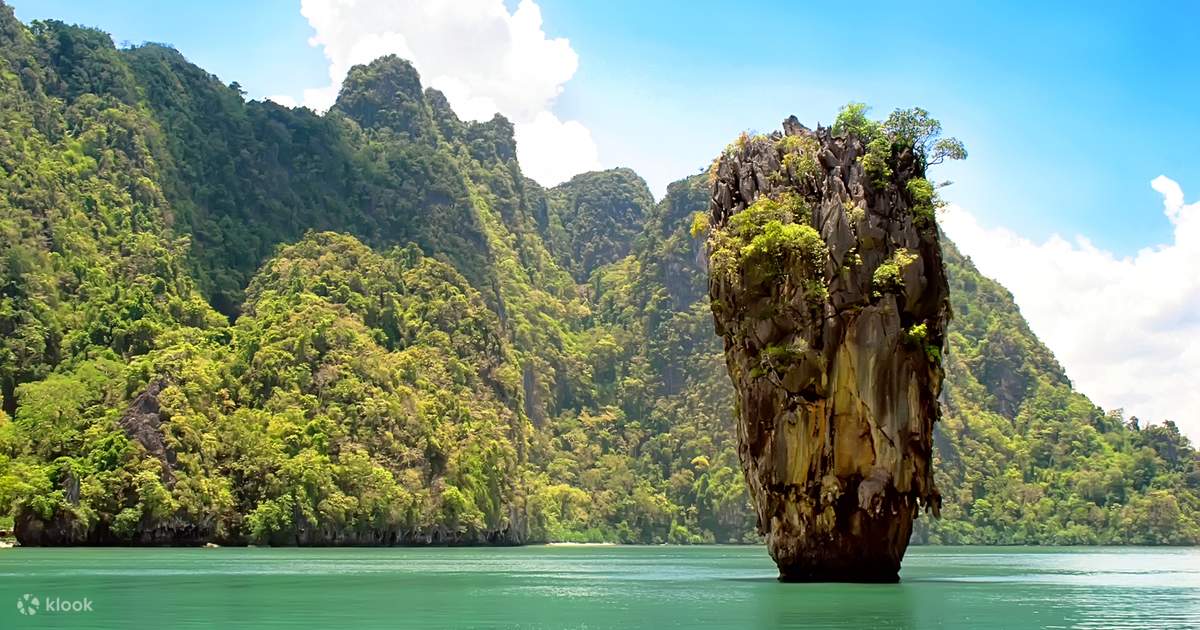
James Bond Island Day Trip from Phuket: Phang Nga Bay by Boat
Phang Nga Bay is a vast shallow bay on the eastern coast of Phuket, filled with dramatic limestone karst islands rising vertically from the sea. The bay became internationally known when it was used as a filming location in the 1974 James Bond film The Man with the Golden Gun, and the distinctive spike-shaped island Ko Tapu has been referred to as James Bond Island ever since. Beyond the cinematic connection, Phang Nga Bay is simply one of Thailand's most spectacular natural landscapes, with hundreds of islands, hidden caves, tidal lagoons called hongs, and mangrove forests forming an extraordinary seascape.
Most visitors explore Phang Nga Bay on a day trip from Phuket by speedboat or long-tail boat. Book the James Bond Island day trip from Phuket on Klook which includes boat transport, a guide, lunch, and stops at Ko Tapu, Ko Panyi fishing village, sea caves, and snorkeling spots. The bay is on the eastern, sheltered side of Phuket, meaning it is accessible year round even during the Andaman Sea monsoon season when the western coast beaches and the Phi Phi Islands may be difficult to visit.
Ko Tapu: The James Bond Island Rock
Ko Tapu is a 20-meter-tall limestone pinnacle that rises almost vertically from the water near Ko Khao Phing Kan, a larger island with twin beach areas on either side. The rock's narrow base and top-heavy shape create an improbable visual effect that makes it one of the most distinctive natural formations in Southeast Asia. The island and its surrounding bay featured prominently in the climactic sequences of The Man with the Golden Gun, and the location has attracted a steady stream of film-interested visitors since the 1970s.
The beach area on Ko Khao Phing Kan where Ko Tapu stands has become quite commercial, with souvenir stalls and food vendors lining the beach. Despite the commercialization, the visual impact of Ko Tapu from the water as you approach by boat is genuinely impressive, particularly in the soft light of early morning. The surrounding bay with its dozens of other limestone islands visible in every direction adds to the spectacle. Most day tour boats make a brief stop here for photographs before continuing to other parts of the bay.
Ko Panyi Floating Village
One of the highlights of a Phang Nga Bay tour is visiting Ko Panyi, a Muslim fishing community built on stilts over the water at the base of a limestone cliff. The village has existed for over 200 years, originally established by Indonesian fishermen who found the cave and cliff-base location provided shelter and access to fishing grounds. Today Ko Panyi is home to approximately 1,500 people living in houses, a mosque, a school, and a football pitch all built on wooden platforms over the sea.
The village is a genuinely inhabited community rather than a theme park attraction, and visiting it offers insight into a distinctive way of life adapted entirely to a marine environment. The narrow walkways between wooden houses, the sound of the call to prayer echoing off the limestone cliffs, and the sight of fishing boats tied up beneath the elevated stilts create a unique atmosphere. Seafood restaurants on the village's waterfront terrace serve fresh fish, crab, and prawn caught from the surrounding bay.
| Stop | Duration | Highlight |
|---|---|---|
| Ko Tapu (James Bond Island) | 30-45 min | Iconic rock, photography, souvenir stalls |
| Ko Panyi Floating Village | 45-60 min | Stilted Muslim fishing community, fresh seafood |
| Sea Caves & Hongs | 45-60 min | Kayaking through limestone caves, hidden lagoons |
| Snorkeling Spots | 30-45 min | Coral reefs, tropical fish, clear water |
| Ko Yao Islands (some tours) | Variable | Quieter islands, local life |
Kayaking Through Sea Caves and Hongs
One of the most memorable experiences on a Phang Nga Bay tour is kayaking through the limestone sea caves that punctuate many of the bay's islands. These caves lead to hongs, which are enclosed tidal lagoons completely hidden within the interiors of hollow limestone islands. The only way to enter is by paddling through a low cave entrance at low tide in a small kayak. Inside the hongs you find an enclosed ecosystem with mangroves, wildlife including sea eagles and macaques, and total quiet separated from the outside world.
The Hong Island group in Phang Nga Bay is particularly well known for kayaking, and several day tours specifically include a kayaking component. The caves and hongs are only accessible during certain tidal windows, so tours time their arrival accordingly. If kayaking is a priority, look for tours that specifically include sea cave kayaking rather than generic James Bond Island tours that may not enter the hongs. The Krabi 4 Islands snorkeling tour from Phuket is another option for those who want more water-based activity than the Phang Nga Bay tour provides.
- Bring rain gear or a light jacket as the bay can be breezy
- Waterproof bag for your phone and camera essential
- Apply sunscreen before boarding as you will be exposed for hours
- The bay is accessible year round - east coast of Phuket
- Book tours including sea cave kayaking for the most complete experience
- Avoid arriving at Ko Tapu between 11AM and 2PM when it is most crowded
- Wear swimwear under clothes for kayaking and potential swimming stops
| Info | Details |
|---|---|
| Location | Phang Nga Bay, east coast of Phuket |
| Best Season | Year round (sheltered bay, less affected by monsoon) |
| Tour Duration | Full day, approximately 7-8 hours |
| Departure Point | Ao Phang Nga pier or Phuket-area piers |
| National Park Fee | 300 THB (usually included in tour price) |
| Water Activities | Kayaking, snorkeling, optional swimming |
Best Time to Visit Phang Nga Bay
Unlike the Phi Phi Islands which lie in the Andaman Sea and can be rough during monsoon season, Phang Nga Bay is on the eastern side of Phuket's peninsula and is sheltered from the worst Andaman weather. This makes it accessible for most of the year. The best conditions for calm water and clear skies are from November through April. During the wet season from May to October, there may be more cloud cover and occasional rain squalls, but the bay remains navigable on most days and tours continue to operate.
May and October in particular are shoulder months that offer reasonable conditions with significantly lower prices and fewer tourists. The limestone karsts and bay scenery can actually look more dramatic under overcast skies with dramatic clouds, which some photographers prefer. If you are visiting Phuket during the wet season and want beach and sea activities, Phang Nga Bay is often the better choice over the Phi Phi Islands because of its protected location. For those seeking classic beach experiences, the Phi Phi Islands tour is best reserved for the dry season visit.
Comparing Phang Nga Bay and Phi Phi Islands
Phang Nga Bay and the Phi Phi Islands offer very different experiences despite both being day trips from Phuket. Phang Nga Bay is primarily about dramatic landscape, cultural visits (Ko Panyi village), and sea kayaking, with snorkeling as a secondary activity. The Phi Phi Islands are primarily about snorkeling, swimming, and beaches, with the film location connection to The Beach being the cultural element. Both are worth doing on separate days. The Phi Phi Islands Premium day tour can be done on one day and Phang Nga Bay on another without repetition of experiences.
For visitors spending an extended time in Phuket, combining Phang Nga Bay, the Phi Phi Islands, and the Krabi 4 Islands snorkeling tour gives a thorough exploration of the region's coastal and island attractions. Each covers different terrain and emphasizes different activities. Adding a day in Krabi town itself, with its limestone cliffs, rock climbing, and relaxed beach atmosphere, rounds out a comprehensive southern Thailand coastal experience. From Phuket you can also fly to Bangkok for the Grand Palace and other cultural sites.
Getting a Thailand Visa and Entry Requirements
Most visitors to Thailand can obtain a visa on arrival or qualify for a visa exemption depending on their passport. Citizens of over 60 countries including the United States, United Kingdom, Australia, most EU nations, and many Asian countries can enter Thailand without a visa for stays of up to 30 days (with some countries receiving 60 days). The visa exemption policy has been expanded and extended multiple times in recent years and Thailand actively encourages tourism. Always verify the current requirements with the Royal Thai Embassy in your country before traveling, as policies can change.
For stays longer than the visa exemption period, a tourist visa (TR) can be applied for at a Thai embassy or consulate in your home country before departure. The tourist visa allows a 60-day stay with a possible 30-day extension at a Thai immigration office. Thailand has land borders with Myanmar, Laos, Cambodia, and Malaysia, and many long-term visitors use border crossing runs to renew their visa exemption status, though immigration policy on this practice has tightened. Once in Thailand, the Grand Palace and cultural sites in Bangkok make excellent first stops before heading to beach destinations or the north.
Transportation Within Thailand
Thailand has an extensive domestic transportation network that makes it easy to travel between regions. Bangkok's international Suvarnabhumi Airport (BKK) and the older Don Mueang Airport (DMK) both handle international and domestic flights. Thai Airways, Bangkok Airways, Air Asia, Nok Air, and Lion Air operate frequent domestic routes connecting Bangkok to Chiang Mai, Phuket, Krabi, Ko Samui, and other major destinations. Domestic flights are affordable and the journey from Bangkok to Chiang Mai takes approximately one hour versus 10-12 hours by train or bus.
The overnight sleeper train from Bangkok to Chiang Mai is a classic Thailand experience, departing Hua Lamphong station in the evening and arriving the next morning. The train is comfortable with private sleeper berths available and the views of the central plains and northern hills are excellent. For shorter distances, Thailand's extensive bus network connects cities and towns throughout the country at low cost. Tuk-tuks and songthaews (shared pickup trucks) provide local transportation within cities and towns. In Bangkok, the BTS Skytrain and MRT metro systems are efficient for navigating the city. The Bangkok food tour by tuk-tuk gives you a genuine tuk-tuk experience while exploring the city's best food neighborhoods.
Budget Planning for Thailand
Thailand offers excellent value across all budget levels. Budget travelers can live comfortably on USD 30-50 per day covering guesthouses, street food, local transportation, and attraction entry fees. Mid-range travelers spending USD 80-150 per day can stay in comfortable hotels, eat at sit-down restaurants, and book organized tours. Luxury travel is also available at internationally competitive prices with world-class resorts available throughout the country.
The biggest expense categories for most visitors are accommodation, day trips, and alcohol. Street food meals typically cost 50-150 THB (USD 1.50-4.50), while restaurants serving international food charge 300-600 THB (USD 9-18) per person. Organized day tours like the Ayutthaya temples tour or the Phi Phi Islands day trip typically cost USD 25-70 per person. Temple entry fees are generally 50-200 THB while major attractions like the Grand Palace cost 500 THB. Budget carefully for southern Thailand islands where boat tours and accommodation are significantly more expensive than the mainland.
| Expense Category | Budget (THB/day) | Mid-Range | Luxury |
|---|---|---|---|
| Accommodation | 300-600 THB | 1,200-3,000 THB | 5,000+ THB |
| Food | 200-400 THB | 600-1,500 THB | 2,000+ THB |
| Local Transport | 100-200 THB | 300-600 THB | 800+ THB |
| Activities/Tours | 500-1,000 THB | 1,500-4,000 THB | 4,000+ THB |
| Total Daily Estimate | ~1,100-2,200 THB | ~3,600-9,100 THB | ~11,800+ THB |
Thailand Itinerary Ideas
A classic one-week Thailand itinerary covers Bangkok for three days, then flies to Phuket or Krabi for four days of beaches and islands. In Bangkok, the Grand Palace half-day tour on day one, the Damnoen Saduak Floating Market on day two morning, and the Ayutthaya day trip on day three gives an excellent cultural foundation. In the south, the Phi Phi Islands day tour and the James Bond Island Phang Nga Bay tour cover the two best day trips from Phuket.
A two-week itinerary can add Chiang Mai in the north for three to four days, with the Elephant Jungle Sanctuary and the Chiang Mai hill tribes trekking tour as the main activities. An evening Muay Thai boxing match in Bangkok and the Bangkok evening street food tour complete the Bangkok nights experience. For those with three weeks, adding the Krabi area for Krabi 4 Islands snorkeling and time on Koh Samui or Koh Phangan gives a comprehensive Thailand experience covering culture, nature, wildlife, and beach life.
Health and Safety in Thailand
Thailand is generally a safe destination for international visitors. The main health considerations are sun protection, hydration in the tropical heat, and food safety. Drink bottled or filtered water rather than tap water throughout the country. Street food from busy stalls with high turnover is generally safe and far fresher than food that has been sitting. Hepatitis A, typhoid, and routine vaccinations are recommended for visits to Thailand. Dengue fever is present throughout the country so using insect repellent, particularly at dawn and dusk in outdoor areas, is advisable.
Travel insurance with medical coverage and evacuation coverage is strongly recommended for Thailand. The country has excellent hospitals in Bangkok, Chiang Mai, and Phuket with internationally trained doctors, but medical care can be expensive. Thailand's political history has seen periods of instability and occasional coups, but the country has remained stable for visitors in recent years and tourism infrastructure continues to develop. The Thailand Tourism Authority (TAT) operates assistance centers in major tourist areas and at airports.
Photography Tips for James Bond Island and Phang Nga Bay
Photographing James Bond Island and Phang Nga Bay well requires understanding the best light conditions and camera positions. The golden hour immediately after sunrise and in the hour before sunset produces the warmest and most flattering light for both architectural and landscape photography. At many popular Thailand sites, arriving for sunrise is worthwhile not only for the light but also because you will have the site largely to yourself before the tour buses arrive. At outdoor sites with reflective water surfaces, calm mornings produce the best reflections and mirror-like conditions that disappear once wind picks up.
Ko Tapu is most photographic from sea level on the approaching boat, particularly in the soft morning light when you are arriving rather than departing. Standard photography guidelines apply throughout: shoot in RAW format if your camera supports it for maximum post-processing flexibility, bring extra batteries as cold temperatures drain batteries faster, protect your equipment from rain and dust with appropriate cases, and use a polarizing filter for shots of water and sky which dramatically reduces glare and deepens colors. A travel tripod is worth carrying for interior low-light shots at temples and museums where flash is typically not permitted.
The sea caves and hong interiors provide extraordinary opportunities for atmospheric photography but the low light requires either a high ISO setting or a phone with good low-light performance. Photographing people at markets, temples, and cultural sites in Thailand should always involve seeking permission, particularly for close portrait shots. Most people are happy to be photographed when asked respectfully, and the gesture of asking rather than photographing without awareness is both ethical and often results in better photographs as subjects are more relaxed and engaged. At busy tourist sites, patience pays off: waiting for a clear moment when other tourists are not in the frame often means waiting only a few minutes at less popular viewpoints, while major landmarks may require either very early arrival or longer waits for clear compositions.
Where to Stay in Phuket
Phuket has accommodation options across a wide range of price points and styles. Budget travelers will find guesthouses and hostels in the near Ao Phang Nga pier area of the city or town from approximately USD 15-30 per night, often with breakfast included and common areas that make meeting other travelers easy. These budget options are clean and functional if not luxurious, and their central locations offset the lack of amenities. For those who prefer more comfort, USD 60-120 range hotels offer private rooms with air conditioning, en-suite bathrooms, reliable WiFi, and often swimming pools.
Luxury travelers will find internationally branded hotels as well as boutique hotels in heritage buildings that combine high standards of service with locally distinctive character. Thailand has invested substantially in tourism infrastructure and the quality of accommodation at all price levels has improved significantly over the past decade. Booking in advance is strongly recommended for visits during peak season when the best-value properties fill up weeks or months ahead. Staying in the most central area of Phuket generally adds convenience and reduces transportation costs, though properties slightly outside the tourist center often offer better value and a more local atmosphere.
Disclosure: This article contains affiliate links. If you book through our Klook links, we may earn a small commission at no extra cost to you. This helps us keep producing free travel guides for readers like you. We only recommend experiences we genuinely believe are worth your time and money.


