
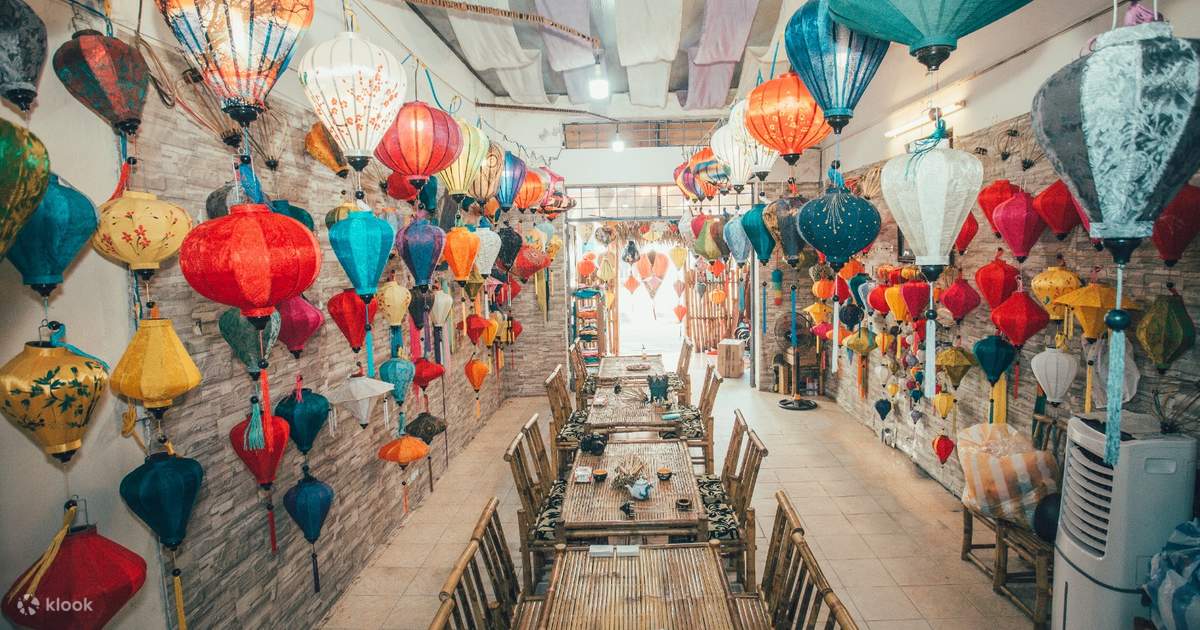
Hoi An Lantern Making Class: Learning a Traditional Vietnamese Craft
Hoi An is one of Southeast Asia's best-preserved historic trading ports, a compact town whose ancient town center of yellow-walled merchant houses, Chinese assembly halls, Japanese covered bridge, and riverside market has remained remarkably intact since the 17th and 18th centuries. The town's UNESCO World Heritage designation reflects this architectural and cultural heritage. Among Hoi An's most characteristic traditions is its lantern-making craft, with workshops lining the streets of the ancient town producing the colorful silk and bamboo lanterns that illuminate the streets every evening.
Book the Hoi An lantern making class on Klook for a 2-hour hands-on workshop taught by local craftspeople who will guide you through the process of constructing a traditional Hoi An lantern from bamboo strips, wire, and colored fabric or silk. The class produces a lantern you can take home as a meaningful souvenir and provides insight into one of the traditional crafts that has defined Hoi An's visual identity for centuries.
The History of Hoi An Lanterns
Hoi An has been producing traditional lanterns since the town was at its peak as a trading port in the 17th and 18th centuries, when Chinese, Japanese, and Southeast Asian merchants settled here and brought their respective craft traditions. The Chinese community brought paper lantern-making traditions that gradually merged with local techniques using different materials. The distinctive Hoi An lantern evolved as a form with a compressed drum shape, colored silk cover, and decorative fringe that distinguished it from Chinese and Japanese lantern types.
The lanterns serve both decorative and symbolic purposes. In Vietnamese Buddhist tradition, releasing lanterns on water or floating them in the river represents releasing negative energy and welcoming positive change. During the monthly full moon festival in Hoi An, the ancient town turns off its electric lights and the streets are lit entirely by thousands of hanging lanterns. This monthly event, called Hoi An Phố Cổ Không Đèn or Old Town Night, creates an extraordinary atmospheric experience that has become one of Vietnam's most photographed occasions.
What You Learn in the Lantern Making Class
The lantern making class begins with an introduction to the materials and tools used in the craft. Traditional Hoi An lanterns use bamboo strips bent into circular rings that form the structural frame, thin wire to connect the rings and create the lantern's shape, and silk or synthetic fabric cut into strips that are glued or sewn onto the frame to create the outer cover. More advanced designs incorporate decorative elements including tassels, calligraphic writing, and embroidery.
Your instructor demonstrates each step slowly before guiding you through it with hands-on assistance. The bamboo frame construction requires some dexterity but is achievable for most visitors including children. Choosing the color and pattern of your lantern fabric is one of the creative decisions you make during the class. By the end of the two-hour session, you have a complete functional lantern that can be hung immediately. The class provides a very different type of engagement with Hoi An's culture compared to walking tours or restaurant visits. For more Hoi An area activities, the Da Nang Son Tra and Marble Mountain tour covers the nearby coast and mountain landmarks.
| Step | Materials | Time |
|---|---|---|
| Frame construction | Bamboo strips, thin wire | 30-40 min |
| Cover attachment | Silk or synthetic fabric, glue | 30-40 min |
| Decoration | Tassels, fringe, optional painting | 20-30 min |
| Assembly and testing | Complete lantern with light | 15-20 min |
Hoi An Ancient Town: Beyond the Lantern Class
The ancient town of Hoi An is compact enough to explore entirely on foot in a single day. The main attractions include the Japanese Covered Bridge at the western end of the commercial street, a 16th-century structure that stands as a symbol of the town and is portrayed on the 20,000 VND note. The Chinese assembly halls of the Fujian, Cantonese, Chaozhou, and Hainan communities provide insight into the ethnic communities that shaped Hoi An's character. The merchant houses along Tran Phu Street, including the famous Phung Hung ancient house, are beautifully preserved examples of 18th-century Vietnamese merchant architecture.
Hoi An is also Vietnam's most established tailoring destination, where skilled seamstresses and tailors produce custom-made clothing to specification within 24 to 48 hours. Bringing or buying fabric and having clothing made to measure is a popular activity for visitors who spend two or more days in the town. The beach at An Bang, 4 kilometers from the ancient town, is one of Vietnam's most relaxed beach spots with good restaurants and calm swimming conditions from October through June. The Hue Imperial City day tour is typically offered as a day trip from Hoi An and covers the ancient Vietnamese imperial capital just 130 kilometers north.
- Book the full moon festival date visit for an extraordinary evening experience
- Combine lantern class with a cooking class for a full hands-on Hoi An day
- The ancient town is best explored on foot in the morning before heat peaks
- A combo ticket is available for multiple heritage buildings in the ancient town
- Buy lanterns directly from workshops at the workshop price rather than tourist shops
- The Hoi An market across the river is less touristy than the ancient town market
- Bring a light layer for evenings as the riverside can be breezy
| Info | Details |
|---|---|
| UNESCO Status | World Heritage Site since 1999 |
| Location | Quang Nam Province, central Vietnam |
| Lantern Class Duration | Approximately 2 hours |
| Price Range | USD 8-20 per person |
| Ancient Town Combo Ticket | 120,000 VND (includes 5 heritage buildings) |
| Best Season | February-May (dry season in central Vietnam) |
Best Time to Visit Hoi An
Central Vietnam's climate is influenced by a weather pattern different from the north and south. The dry season in Hoi An runs from approximately February through August, with the warmest and most reliably sunny weather from February through May. The rainy season from September through January brings significant rainfall, particularly from October through December when typhoon systems passing through the South China Sea can dump enormous amounts of rain on the central coast, occasionally causing flooding in the ancient town.
The full moon festival occurs monthly on the 14th day of the lunar calendar, when the ancient town shuts off electric lights and is illuminated by lanterns. This happens every month, so with some planning it is possible to schedule your Hoi An visit to include a full moon evening regardless of what time of year you are traveling. For visitors traveling through central Vietnam, combining Hoi An with the Hue Imperial City, the Da Nang coastal tour, and a Halong Bay cruise in the north creates a comprehensive central and northern Vietnam cultural journey.
Planning Your Vietnam Trip: Visa and Entry
Vietnam has expanded its visa-free access significantly in recent years. Citizens of many European countries, the United Kingdom, Australia, Japan, South Korea, and several ASEAN nations can enter Vietnam visa-free for stays of 30 to 90 days depending on nationality. The e-Visa (electronic visa) system allows most other nationalities to apply online for a single or multiple entry visa valid for up to 90 days, processed within 3 business days. The e-Visa costs USD 25 and is available at eVisa.xuatnhapcanh.gov.vn. Visa on arrival is available for those who pre-arrange approval letters.
Vietnam's main international entry points are Hanoi's Noi Bai Airport, Ho Chi Minh City's Tan Son Nhat Airport, and Da Nang Airport. Hanoi serves as the northern gateway for visits to Halong Bay, Ninh Binh, and Sapa. Ho Chi Minh City is the southern gateway for Cu Chi Tunnels, the Mekong Delta, and the Saigon food tour. Da Nang serves central Vietnam including Hoi An, Hue, and Da Nang attractions.
Traveling the Length of Vietnam
Vietnam is a long, narrow country stretching approximately 1,650 kilometers from north to south, and traveling its full length is one of Southeast Asia's great journeys. Most visitors travel either north to south or south to north, starting in either Hanoi or Ho Chi Minh City. The classic Vietnam journey from Hanoi begins with Halong Bay cruise and a day trip to Ninh Binh, then a sleeper train to Hue for the Imperial City, onward to Da Nang for the Marble Mountains, and Hoi An for the lantern-making class and ancient town.
Continuing south from Hoi An, the flight or bus to Ho Chi Minh City opens access to the Cu Chi Tunnels, the Mekong Delta, and the Saigon motorbike food tour. This full south traversal takes a minimum of 10-14 days and rewards travelers who allocate 3 weeks or more to experience each destination properly. Adding the Hanoi food motorbike tour in Hanoi and the Sapa trekking tour in the northwest extends the journey but adds the mountain landscapes that contrast beautifully with the coastal cities and delta regions.
| City/Region | Best Activities | Stay Duration | Atmosphere |
|---|---|---|---|
| Hanoi | Food tour, Hoan Kiem Lake, Old Quarter | 2-3 days | Historic, cultural |
| Halong Bay | 2D1N cruise, kayaking | 2 days | Dramatic karst seascape |
| Ninh Binh | Tam Coc, Hoa Lu, Hang Mua | 1 day trip | Inland karst, peaceful |
| Sapa | Trekking, hill tribes, Fansipan | 3-4 days | Mountain, remote |
| Hue | Imperial City, royal tombs | 1-2 days | Imperial, historic |
| Hoi An | Ancient town, lanterns, beaches | 2-3 days | Colonial heritage |
| Da Nang | Marble Mountains, Son Tra | 1 day | Coastal, active |
| Ho Chi Minh City | Food tour, war history | 2-3 days | Urban, energetic |
| Mekong Delta | River, floating markets | 1 day trip | Rural, agricultural |
Vietnamese Food Culture and What to Eat
Vietnamese cuisine is one of Asia's most celebrated food traditions, characterized by fresh herbs, balanced flavors of sour, sweet, salty, and umami, and an emphasis on freshness and minimal processing. The Hanoi food motorbike tour in the north and the Saigon motorbike food tour in the south together give a comprehensive picture of how Vietnamese food varies between the country's two major cities and culinary traditions. Northern Vietnamese food is more subtle and less sweet, while southern food is richer, more varied, and incorporates more fresh herbs.
Pho, the beef or chicken noodle soup, is Vietnam's most internationally recognized dish and varies significantly between Hanoi and Ho Chi Minh City in broth clarity, sweetness, and accompaniments. Banh mi, the Vietnamese baguette sandwich, reflects the French colonial legacy and is available throughout the country at excellent quality. Bun cha (Hanoi), bun bo Hue (Hue), cao lau (Hoi An), and mi quang (Quang Nam) are regional noodle specialties worth seeking out in their home cities. Vietnamese coffee with sweetened condensed milk, served both hot and iced, is consumed throughout the day and is strongly associated with the country's cafe culture. The Hoi An lantern making class includes breaks for local food and drink during the craft session.
Health and Safety in Vietnam
Vietnam is generally safe for international travelers. The most common health issues are gastrointestinal problems from food or water, sunburn, and minor injuries from traffic accidents. Drink bottled or filtered water throughout Vietnam and avoid ice in drinks except at established restaurants and hotels. Tap water is not safe to drink. Food from busy street stalls is generally safe and fresh. Getting recommended vaccinations before travel including Hepatitis A, typhoid, and Japanese encephalitis for extended stays is advisable.
Traffic in Vietnamese cities, particularly Ho Chi Minh City and Hanoi, is intense with motorbikes forming the majority of vehicles. Crossing streets requires patience and a steady pace to allow motorbikes to flow around you. The motorbike tour format, as offered on the Hanoi food tour and Saigon adventure tour, uses experienced local drivers who navigate traffic safely. Travel insurance covering medical expenses and emergency evacuation is strongly recommended. Vietnam has good hospitals in major cities but medical care requires upfront payment. Currency is the Vietnamese dong (VND); ATMs are widely available in cities and tourist areas.
Photography Tips for Hoi An
Photographing Hoi An well requires understanding the best light conditions and camera positions. The golden hour immediately after sunrise and in the hour before sunset produces the warmest and most flattering light for both architectural and landscape photography. At many popular Vietnam sites, arriving for sunrise is worthwhile not only for the light but also because you will have the site largely to yourself before the tour buses arrive. At outdoor sites with reflective water surfaces, calm mornings produce the best reflections and mirror-like conditions that disappear once wind picks up.
The ancient town is most beautiful photographically in the early morning before 8 AM and in the evening when the lanterns illuminate the streets, particularly during the monthly full moon festival. Standard photography guidelines apply throughout: shoot in RAW format if your camera supports it for maximum post-processing flexibility, bring extra batteries as cold temperatures drain batteries faster, protect your equipment from rain and dust with appropriate cases, and use a polarizing filter for shots of water and sky which dramatically reduces glare and deepens colors. A travel tripod is worth carrying for interior low-light shots at temples and museums where flash is typically not permitted.
The Japanese Covered Bridge is one of Vietnam's most photographed structures - shoot from the eastern end looking west in morning light for the best angle. Photographing people at markets, temples, and cultural sites in Vietnam should always involve seeking permission, particularly for close portrait shots. Most people are happy to be photographed when asked respectfully, and the gesture of asking rather than photographing without awareness is both ethical and often results in better photographs as subjects are more relaxed and engaged. At busy tourist sites, patience pays off: waiting for a clear moment when other tourists are not in the frame often means waiting only a few minutes at less popular viewpoints, while major landmarks may require either very early arrival or longer waits for clear compositions.
Where to Stay in Hoi An
Hoi An has accommodation options across a wide range of price points and styles. Budget travelers will find guesthouses and hostels in the near the Hoi An Ancient Town entrance area of the city or town from approximately USD 10-20 per night, often with breakfast included and common areas that make meeting other travelers easy. These budget options are clean and functional if not luxurious, and their central locations offset the lack of amenities. For those who prefer more comfort, USD 40-100 range hotels offer private rooms with air conditioning, en-suite bathrooms, reliable WiFi, and often swimming pools.
Luxury travelers will find internationally branded hotels as well as boutique hotels in heritage buildings that combine high standards of service with locally distinctive character. Vietnam has invested substantially in tourism infrastructure and the quality of accommodation at all price levels has improved significantly over the past decade. Booking in advance is strongly recommended for visits during peak season when the best-value properties fill up weeks or months ahead. Staying in the most central area of Hoi An generally adds convenience and reduces transportation costs, though properties slightly outside the tourist center often offer better value and a more local atmosphere.
Disclosure: This article contains affiliate links. If you book through our Klook links, we may earn a small commission at no extra cost to you. This helps us keep producing free travel guides for readers like you. We only recommend experiences we genuinely believe are worth your time and money.


