
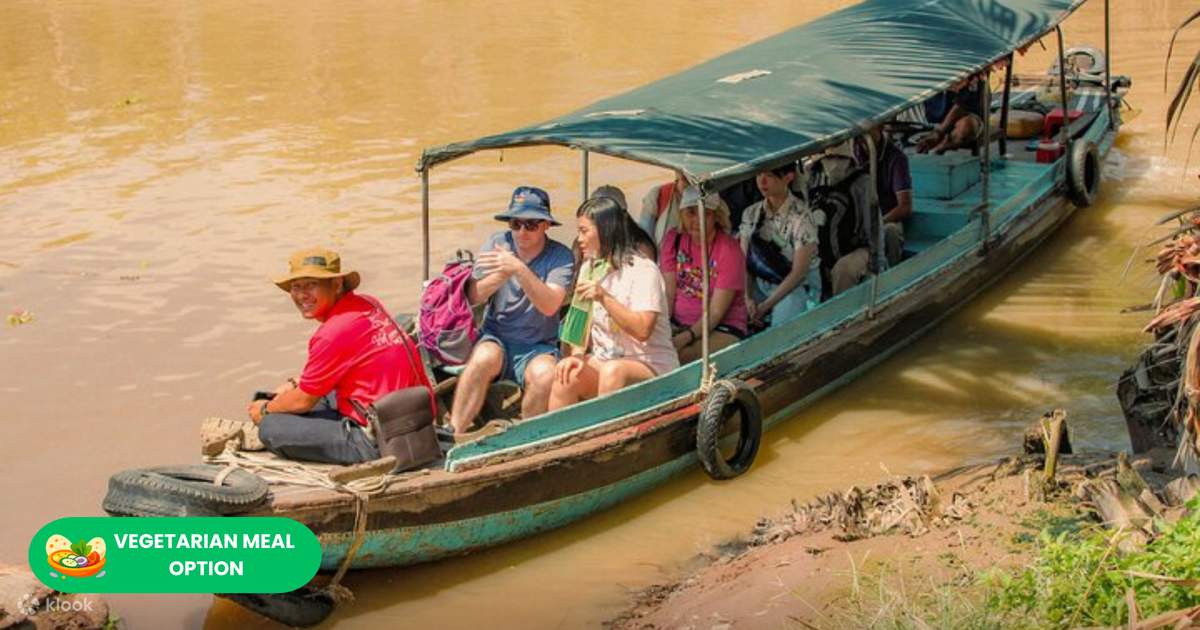
Mekong Delta Full Day Tour from Ho Chi Minh City: River Life in Southern Vietnam
The Mekong Delta is one of the most productive agricultural regions in Southeast Asia, a network of rivers, canals, rice paddies, and floating markets spreading across the southern tip of Vietnam below Ho Chi Minh City. The delta is formed by the Mekong River as it approaches the South China Sea, splitting into multiple branches that irrigate an area of 39,000 square kilometers and produce enough rice to feed the country and export substantial quantities internationally. The region has its own distinct culture, dialect, and cuisine shaped by the waterway lifestyle.
Book the full-day Mekong Delta tour on Klook which departs from Ho Chi Minh City in the morning and covers a well-curated set of Mekong Delta experiences including river boat journeys, visits to cottage industries producing traditional goods, cycling through rural villages, and a floating market observation. The guided tour provides context that makes the experience genuinely educational rather than simply scenic.
The Mekong River System
The Mekong River is one of the world's great rivers, originating in the Tibetan Plateau and flowing through China, Myanmar, Laos, Thailand, and Cambodia before entering Vietnam and spreading into the delta system. By the time it reaches Vietnam, the river has become the Cuu Long (Nine Dragons River) as it divides into the multiple channels that created the delta. The water carries vast quantities of sediment from upstream that continuously extends the delta into the sea, making the delta one of the most geologically active landscapes in Southeast Asia.
The delta's agricultural productivity depends on the seasonal flooding cycle of the Mekong, which deposits nutrient-rich silt across the floodplains each year. This natural fertilization system has supported dense human settlement for millennia and currently supports a population of approximately 17 million people. The region's water-adapted culture is reflected in the omnipresence of boats as transportation, the floating markets where vendors sell produce from boats, and the canal-side villages where homes and markets are built right at the water's edge.
Key Experiences on the Day Tour
Most Mekong Delta day tours from Ho Chi Minh City travel to the My Tho and Ben Tre area, approximately 70 kilometers from the city. The journey by road takes about 1.5 hours and the tour proceeds by boat along the river channels and into narrower canals. Key stops typically include a visit to a bee farm and honey production facility, a coconut candy workshop where coconut products are made using traditional methods, and a fruit orchard where seasonal tropical fruits are grown for sampling.
The boat journey through narrow canals shaded by coconut palms and water hyacinth is one of the most pleasant physical experiences of the tour, providing a completely different perspective on Vietnam than the urban Ho Chi Minh City experience. The local markets and villages along the canal banks give glimpses into rural delta life. Many tours include a brief cycle through village paths, a sampan (small rowboat) ride paddled by local women through even narrower waterways, and a demonstration of traditional music or crafts at a local home. The Saigon motorbike food tour provides a complementary urban experience in Ho Chi Minh City itself.
| Experience | Duration | Location |
|---|---|---|
| River boat journey | 2-3 hours total | Main Mekong channels and side canals |
| Bee farm visit | 20-30 min | Honey tasting, beekeeping demonstration |
| Coconut candy workshop | 20-30 min | Traditional candy production |
| Fruit orchard sampling | 30 min | Seasonal tropical fruits |
| Sampan rowboat ride | 20-30 min | Narrow jungle canals |
| Cycling | 30-45 min | Village paths between canal stops |
Floating Markets and Village Life
The Mekong Delta floating markets are traditional commerce venues where wholesale fruit and vegetable traders converge on the water before dawn to sell their produce. Cai Rang floating market near Can Tho is the largest and most active, typically peaking between 5:00 AM and 7:00 AM before daytime heat reduces activity. Smaller floating markets at Cai Be are often included in day tours from Ho Chi Minh City as the distance is more manageable. The tradition of hanging a sample of goods from a pole at the front of the boat to indicate what is for sale is distinctive to the Mekong Delta floating markets.
The canal-side villages of the delta have a timeless quality, with wooden houses built on stilts over the water, children playing on the canal banks, fishing boats moored at doorsteps, and women paddling dugout canoes between homes. This rural lifestyle has remained remarkably consistent despite rapid urban development in the cities. A day tour from Ho Chi Minh City provides a genuine contrast to the dense urban environment of the city and gives context for understanding the agricultural and cultural foundations of southern Vietnamese society. For more of Vietnam's cultural heritage, the Cu Chi Tunnels half-day tour addresses the war history, while the Halong Bay cruise shows the very different northern landscape.
- Book a tour that includes boat travel through narrow canals, not just big river
- Bring cash for purchasing local products at cottage industry stops
- Insect repellent essential for outdoor activities along the waterways
- Wear clothes you don't mind getting splashed on the sampan sections
- Early departure from HCMC (7-8 AM) maximizes time in the delta
- Look for tours that include Can Tho or Ben Tre rather than just My Tho for more depth
- Floating markets are most active at sunrise - some tours offer this option
| Info | Details |
|---|---|
| Distance from HCMC | 70-130 km depending on destination |
| Tour Duration | Full day (approximately 10-11 hours) |
| Best Destination | Ben Tre or Can Tho for more authentic experience |
| Best Season | December to April (dry season) |
| Transport to Delta | Bus or minivan from HCMC |
| Physical Demand | Low - mainly boat and light cycling |
Best Time to Visit the Mekong Delta
The dry season from December to April offers the best conditions for Mekong Delta tours. During these months the waterways are at their lower level, the air is relatively clear and dry, and travel conditions on both road and water are straightforward. The delta landscape is lush from the previous rainy season's growth and temperatures are pleasant rather than extreme. January and February are particularly comfortable with temperatures around 25-30 degrees Celsius.
The wet season from May to October brings heavy rainfall and higher water levels. The flooding during September and October can be quite significant in some delta areas, and some village paths used on tours become inaccessible. However, the high water season in September to November actually creates a distinctive landscape of flooded fields with submerged vegetation, and the local fishing activity peaks during this period. If visiting the delta in the wet season, expect that some tour elements may be adjusted based on water conditions. After your southern Vietnam exploration, traveling north to central Vietnam for the Hue Imperial City and Hoi An lantern making provides a rich continuation of the Vietnam experience.
Planning Your Vietnam Trip: Visa and Entry
Vietnam has expanded its visa-free access significantly in recent years. Citizens of many European countries, the United Kingdom, Australia, Japan, South Korea, and several ASEAN nations can enter Vietnam visa-free for stays of 30 to 90 days depending on nationality. The e-Visa (electronic visa) system allows most other nationalities to apply online for a single or multiple entry visa valid for up to 90 days, processed within 3 business days. The e-Visa costs USD 25 and is available at eVisa.xuatnhapcanh.gov.vn. Visa on arrival is available for those who pre-arrange approval letters.
Vietnam's main international entry points are Hanoi's Noi Bai Airport, Ho Chi Minh City's Tan Son Nhat Airport, and Da Nang Airport. Hanoi serves as the northern gateway for visits to Halong Bay, Ninh Binh, and Sapa. Ho Chi Minh City is the southern gateway for Cu Chi Tunnels, the Mekong Delta, and the Saigon food tour. Da Nang serves central Vietnam including Hoi An, Hue, and Da Nang attractions.
Traveling the Length of Vietnam
Vietnam is a long, narrow country stretching approximately 1,650 kilometers from north to south, and traveling its full length is one of Southeast Asia's great journeys. Most visitors travel either north to south or south to north, starting in either Hanoi or Ho Chi Minh City. The classic Vietnam journey from Hanoi begins with Halong Bay cruise and a day trip to Ninh Binh, then a sleeper train to Hue for the Imperial City, onward to Da Nang for the Marble Mountains, and Hoi An for the lantern-making class and ancient town.
Continuing south from Hoi An, the flight or bus to Ho Chi Minh City opens access to the Cu Chi Tunnels, the Mekong Delta, and the Saigon motorbike food tour. This full south traversal takes a minimum of 10-14 days and rewards travelers who allocate 3 weeks or more to experience each destination properly. Adding the Hanoi food motorbike tour in Hanoi and the Sapa trekking tour in the northwest extends the journey but adds the mountain landscapes that contrast beautifully with the coastal cities and delta regions.
| City/Region | Best Activities | Stay Duration | Atmosphere |
|---|---|---|---|
| Hanoi | Food tour, Hoan Kiem Lake, Old Quarter | 2-3 days | Historic, cultural |
| Halong Bay | 2D1N cruise, kayaking | 2 days | Dramatic karst seascape |
| Ninh Binh | Tam Coc, Hoa Lu, Hang Mua | 1 day trip | Inland karst, peaceful |
| Sapa | Trekking, hill tribes, Fansipan | 3-4 days | Mountain, remote |
| Hue | Imperial City, royal tombs | 1-2 days | Imperial, historic |
| Hoi An | Ancient town, lanterns, beaches | 2-3 days | Colonial heritage |
| Da Nang | Marble Mountains, Son Tra | 1 day | Coastal, active |
| Ho Chi Minh City | Food tour, war history | 2-3 days | Urban, energetic |
| Mekong Delta | River, floating markets | 1 day trip | Rural, agricultural |
Vietnamese Food Culture and What to Eat
Vietnamese cuisine is one of Asia's most celebrated food traditions, characterized by fresh herbs, balanced flavors of sour, sweet, salty, and umami, and an emphasis on freshness and minimal processing. The Hanoi food motorbike tour in the north and the Saigon motorbike food tour in the south together give a comprehensive picture of how Vietnamese food varies between the country's two major cities and culinary traditions. Northern Vietnamese food is more subtle and less sweet, while southern food is richer, more varied, and incorporates more fresh herbs.
Pho, the beef or chicken noodle soup, is Vietnam's most internationally recognized dish and varies significantly between Hanoi and Ho Chi Minh City in broth clarity, sweetness, and accompaniments. Banh mi, the Vietnamese baguette sandwich, reflects the French colonial legacy and is available throughout the country at excellent quality. Bun cha (Hanoi), bun bo Hue (Hue), cao lau (Hoi An), and mi quang (Quang Nam) are regional noodle specialties worth seeking out in their home cities. Vietnamese coffee with sweetened condensed milk, served both hot and iced, is consumed throughout the day and is strongly associated with the country's cafe culture. The Hoi An lantern making class includes breaks for local food and drink during the craft session.
Health and Safety in Vietnam
Vietnam is generally safe for international travelers. The most common health issues are gastrointestinal problems from food or water, sunburn, and minor injuries from traffic accidents. Drink bottled or filtered water throughout Vietnam and avoid ice in drinks except at established restaurants and hotels. Tap water is not safe to drink. Food from busy street stalls is generally safe and fresh. Getting recommended vaccinations before travel including Hepatitis A, typhoid, and Japanese encephalitis for extended stays is advisable.
Traffic in Vietnamese cities, particularly Ho Chi Minh City and Hanoi, is intense with motorbikes forming the majority of vehicles. Crossing streets requires patience and a steady pace to allow motorbikes to flow around you. The motorbike tour format, as offered on the Hanoi food tour and Saigon adventure tour, uses experienced local drivers who navigate traffic safely. Travel insurance covering medical expenses and emergency evacuation is strongly recommended. Vietnam has good hospitals in major cities but medical care requires upfront payment. Currency is the Vietnamese dong (VND); ATMs are widely available in cities and tourist areas.
Photography Tips for the Mekong Delta
Photographing the Mekong Delta well requires understanding the best light conditions and camera positions. The golden hour immediately after sunrise and in the hour before sunset produces the warmest and most flattering light for both architectural and landscape photography. At many popular Vietnam sites, arriving for sunrise is worthwhile not only for the light but also because you will have the site largely to yourself before the tour buses arrive. At outdoor sites with reflective water surfaces, calm mornings produce the best reflections and mirror-like conditions that disappear once wind picks up.
The floating market photography works best from water level on a small boat positioned among the vendor boats, capturing the scale and color of the produce-laden vessels. Standard photography guidelines apply throughout: shoot in RAW format if your camera supports it for maximum post-processing flexibility, bring extra batteries as cold temperatures drain batteries faster, protect your equipment from rain and dust with appropriate cases, and use a polarizing filter for shots of water and sky which dramatically reduces glare and deepens colors. A travel tripod is worth carrying for interior low-light shots at temples and museums where flash is typically not permitted.
Canal photography in narrow waterways requires a wide lens to capture both the water, the overhanging vegetation, and the canal-side houses in a single frame. Photographing people at markets, temples, and cultural sites in Vietnam should always involve seeking permission, particularly for close portrait shots. Most people are happy to be photographed when asked respectfully, and the gesture of asking rather than photographing without awareness is both ethical and often results in better photographs as subjects are more relaxed and engaged. At busy tourist sites, patience pays off: waiting for a clear moment when other tourists are not in the frame often means waiting only a few minutes at less popular viewpoints, while major landmarks may require either very early arrival or longer waits for clear compositions.
Where to Stay in Ho Chi Minh City or Can Tho
Ho Chi Minh City or Can Tho has accommodation options across a wide range of price points and styles. Budget travelers will find guesthouses and hostels in the Can Tho riverfront area of the city or town from approximately USD 10-20 per night, often with breakfast included and common areas that make meeting other travelers easy. These budget options are clean and functional if not luxurious, and their central locations offset the lack of amenities. For those who prefer more comfort, USD 40-100 range hotels offer private rooms with air conditioning, en-suite bathrooms, reliable WiFi, and often swimming pools.
Luxury travelers will find internationally branded hotels as well as boutique hotels in heritage buildings that combine high standards of service with locally distinctive character. Vietnam has invested substantially in tourism infrastructure and the quality of accommodation at all price levels has improved significantly over the past decade. Booking in advance is strongly recommended for visits during peak season when the best-value properties fill up weeks or months ahead. Staying in the most central area of Ho Chi Minh City or Can Tho generally adds convenience and reduces transportation costs, though properties slightly outside the tourist center often offer better value and a more local atmosphere.
Disclosure: This article contains affiliate links. If you book through our Klook links, we may earn a small commission at no extra cost to you. This helps us keep producing free travel guides for readers like you. We only recommend experiences we genuinely believe are worth your time and money.


