How Far Is a Real Day Trip From Paris?
Paris sits in the middle of a region that rewards leaving it for a day. Gardens, chateaux, a WWII beachhead, and a smaller palace that gets a fraction of Versailles' crowds are all within reach of the city's train stations, and you don't need a car for most of them. But the destinations vary enormously in how much of your day they actually cost you, and "day trip" gets stretched to cover some places that are really closer to a full expedition.
Giverny is the easy one: under 90 minutes door to door by train and shuttle, gardens included. Fontainebleau is even quicker, and quieter than its fame deserves. The Loire Valley chateaux are further than people expect once you account for getting between them, not just to them. Normandy and the D-Day beaches are the honest outlier here, a genuinely long single day that works better with an early start and a guided coach than a DIY train itinerary pieced together on the fly.
One destination on every "day trips from Paris" list won't get re-explained here: Versailles already has its own full guide on this site, ticket strategy and gardens included, since it deserves more depth than a single paragraph in a roundup. This guide covers everywhere else, distances and travel times included, so you can decide which one actually fits the day you have left in Paris.
Giverny: Monet's Water-Lily Gardens, Paris's Easiest Day Trip

Giverny is the village where Claude Monet lived for the last 43 years of his life, and where he painted the water-lily pond that eventually filled entire rooms at the Musée de l'Orangerie back in Paris. Trains leave Gare Saint-Lazare for Vernon roughly every 30 to 60 minutes, and the ride takes about 45 to 50 minutes on the faster departures, closer to an hour and 15 on the slower regional ones. From Vernon station, a shuttle bus covers the last stretch to Giverny village in about 10 minutes. Add it up and you're looking at well under an hour and a half of travel each way, which is short enough that Giverny works even as a half-day add-on rather than eating your whole schedule.
The catch is timing, not distance. The shuttle bus runs on a schedule tied to the garden's own opening season, roughly April through November, with limited departures rather than constant service, so it pays to check the timetable before you leave rather than after you're standing at Vernon station. Some operators also run a direct coach straight from central Paris on select days in season, which skips the train-to-shuttle transfer entirely if you'd rather not manage two separate timetables. Once you're there, the house and gardens are compact enough to see thoroughly in two to three hours: the pink house with green shutters, the flower-packed Clos Normand, and the Japanese bridge over the lily pond that shows up in dozens of his canvases. Outside the April-to-November season, the gardens close entirely, which is worth knowing before you build a winter Paris itinerary around this one.
The Loire Valley From Paris: Worth Committing a Full Day?

The train ride itself is faster than most people assume. The quickest TGVs from Montparnasse reach Tours in a little over an hour, and direct trains to Amboise take roughly 75 to 90 minutes from Paris. That part of the trip is genuinely easy. What makes the Loire Valley a longer day than Giverny or Fontainebleau is what happens after you get off the train: the chateaux aren't clustered around one station, and getting between them without a car means relying on infrequent local trains and seasonal shuttle buses.
Amboise is the most forgiving option for a self-guided trip, since the chateau is a 10 to 15 minute walk from the station and Leonardo da Vinci's final home, Clos Lucé, is close by too. Chenonceau, arguably the most photographed chateau in the valley for the way it arches over the River Cher, has its own small station with limited weekend and summer service and a short walk from there to the entrance. Chambord is the one that trips people up: there's no train station anywhere near it, and reaching it from Blois-Chambord station means a seasonal shuttle bus or a roughly 25-minute taxi ride each way.
So the honest version is this: seeing one chateau by train on your own, Amboise especially, is a realistic and pleasant day. Seeing two or three, including Chambord, is where a guided coach tour or a private driver genuinely earns its cost, since it removes the connector-bus guesswork and lets you see the region's biggest names in the same day instead of committing to just one.
Normandy and the D-Day Beaches From Paris: The Longest Day Trip Here

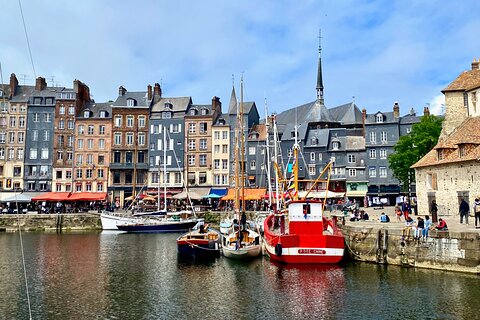
This is the destination on this list that deserves the most honesty about its length. The fastest trains from Paris Saint-Lazare to Bayeux, the small Norman town closest to the D-Day beaches, take about 2 hours and 12 minutes; the average run closer to 3 hours across the roughly 225-kilometer route, with around 13 departures a day. Bayeux itself isn't the beaches, either. Omaha Beach and the Normandy American Cemetery sit about 12 miles further on, a 20 to 25 minute drive, a €30-ish taxi ride, or roughly 40 minutes on the limited-schedule local bus. Stack the legs together and you're realistically past 2.5 hours each way once you count the beach leg, sometimes closer to 3.5.
That makes Normandy a full day by any honest measure. Guided coach tours from Paris typically leave around 7am and don't get back until 9 or 10pm, which is a long day but also the version most travelers actually book, since it bundles the beach-hopping between Omaha, Utah, and the cemetery into one itinerary without you having to arrange local transport twice. Bayeux itself is worth the stop too, home to the nearly thousand-year-old Bayeux Tapestry depicting the Norman conquest of England, on top of the beaches themselves.
If a single very long day sounds like more than you want, it's worth considering an overnight in Bayeux instead, which turns a rushed round trip into an unhurried two days. Our multi-day tour options cover that kind of extended itinerary if you'd rather not compress Normandy into sunrise-to-nightfall travel.
Fontainebleau: The Day Trip From Paris Everyone Skips
Fontainebleau doesn't get anywhere near the attention Versailles does, which is strange given how easy it is to reach. Trains from Gare de Lyon to Fontainebleau-Avon station take about 40 to 45 minutes, with the fastest direct services closer to 39. From the station, a local bus covers the roughly two miles into town in about 13 minutes, or it's a flat 30 to 40 minute walk if you'd rather stretch your legs. Either way, you can be standing in front of the chateau in well under an hour and a half of total travel, chateau included, which makes this one of the closer options on this whole list, closer in practice than Giverny once transfer waits are factored in.
The palace itself was a royal and imperial residence for over seven centuries, added to and renovated by everyone from medieval kings through Napoleon, who abdicated here in 1814 and left behind some of the most lavish rooms in the building. Because it doesn't pull Versailles-sized crowds, you can actually take in details like the horseshoe staircase and the ballroom without shuffling through a line the whole time. The surrounding Forest of Fontainebleau is a legitimate reason to stay longer than the palace alone requires too, popular with hikers and known internationally among rock climbers for its sandstone boulders. If your remaining Paris time is short but you still want a real chateau experience, Fontainebleau does more with less travel than almost anywhere else on this page.
Versailles and Champagne: Two More Day Trips From Paris We Cover Elsewhere
Two other popular day trips from Paris deserve a mention here without repeating what's already written in more depth elsewhere on this site. Versailles is the obvious one: Louis XIV's palace and its 800 hectares of gardens are the single most-booked day trip from Paris, and we've given it its own dedicated full guide covering ticket strategy, the gardens, and how to avoid the worst of the crowds, rather than squeezing it into a paragraph here.
The Champagne region around Reims and Épernay is the other one. It's a genuine day trip from Paris, roughly 45 minutes to Reims by fast train, and it's built around cellar visits and tastings at houses like Moët & Chandon rather than sightseeing in the traditional sense, which makes it different enough from the destinations on this page that it gets its own treatment on our wine tours page. If Champagne or Burgundy is what you're after for the day, that's the page to start with instead of this one.
Coach Tour, Train, or Private Driver: How to Actually Reach These Paris Day Trips
For Giverny and Fontainebleau, the train is the simplest and cheapest way to go: frequent departures, short rides, and stations close enough to the actual sight that you're not managing a second leg of transport for long. A guided coach tour adds commentary and, at Fontainebleau especially, context that the palace's information panels don't fully cover on their own, but it isn't necessary the way it is for the more spread-out destinations.
The Loire Valley and Normandy are where the calculation shifts. Both involve a leg, the chateau-to-chateau connections in the Loire or the Bayeux-to-beaches transfer in Normandy, that's either infrequent by public transit or adds real time to an already long day. A private driver removes that friction entirely, at a real cost premium, while a small-group guided coach tour splits the difference: cheaper than a private car, and someone else handles the routing, parking, and timing you'd otherwise have to plan yourself.
Cost is worth being honest about too. A self-guided train day to Giverny or Fontainebleau runs a modest amount plus admission. A seat on a shared coach tour to the Loire or Normandy costs more but bundles in the chateau-hopping or beach transfers you'd otherwise have to arrange piecemeal. A private driver for a full day costs the most on paper, but split across three or four people, it can land closer to a coach tour's per-person price than it first appears, especially for Normandy, where it saves real hours rather than just adding comfort.
Pairing Two Stops in One Day From Paris
A few of these destinations work well as a combined day rather than two separate trips out of Paris. Giverny pairs naturally with Auvers-sur-Oise, the village north of the city where Van Gogh spent his final months and is buried; both are impressionist pilgrimage sites, and a private tour or driver can string them together into one themed day without doubling your travel time, since the connection between the two villages by public transit alone is thin.
Fontainebleau sometimes gets paired with Vaux-le-Vicomte, the chateau that reportedly inspired Versailles and predates it by decades, though that combination leans hard toward needing a car or private tour, since Vaux-le-Vicomte has no direct train service of its own. What doesn't pair well: don't try to bolt Fontainebleau onto a Loire Valley day just because both involve chateaux, and don't attempt Normandy alongside anything else. Both of those destinations are long enough on their own to deserve being the single focus of the day rather than a rushed add-on.
Best Time of Year for Paris Day Trips
Spring and early autumn are the strongest windows for nearly everything on this list, mild enough for a full day outdoors at Giverny's gardens or wandering Fontainebleau's forest, and ahead of the peak summer crowds at the Loire chateaux. Giverny is the one true seasonal destination here: the gardens and the Vernon-Giverny shuttle bus both run only from roughly April through November, so a winter Paris trip simply won't include this option no matter how well you plan the rest of the logistics.
The Loire chateaux stay open year-round, though the formal gardens at places like Chenonceau are considerably less impressive in winter than in the growing season, and some of the seasonal connector shuttles to Chambord scale back outside peak months. Normandy is worth visiting in any season for the history, but summer brings the heaviest crowds to the American Cemetery and Omaha Beach, while winter days are shorter, which matters more here than anywhere else on this list given how much of the day is already spent in transit. Fontainebleau, by contrast, is the safest year-round bet: quick train access that doesn't depend on a seasonal timetable, and a palace interior that's just as impressive regardless of the weather outside.
How to Choose the Right Day Trip for Your Remaining Paris Time
If you only have half a day free, Fontainebleau is the clear pick: under an hour and a half door to door, and a genuine royal palace waiting at the other end without the Versailles-sized crowds. A full free day opens up Giverny comfortably, with time left over, or one chateau in the Loire Valley if you're willing to commit to Amboise or Chenonceau specifically rather than trying to see the whole region at once.
If multiple Loire chateaux are the point of the trip, plan around a guided coach tour or private driver rather than assembling local trains and seasonal shuttles yourself, since that's the piece of the day most likely to go sideways on a DIY itinerary. And if Normandy and the D-Day beaches are what actually brought you to this page, be honest with yourself about the length of the day: an early start with a guided tour handles the logistics well, but if you have any flexibility to turn it into an overnight in Bayeux instead, that's usually the better trip, not just the easier one. For everything else Paris itself has to offer before or after any of these, see our main Paris tours and attractions overview.
Practical Tips and What to Pack for Paris Day Trips
Book Giverny's shuttle bus or a Loire Valley coach tour a few days ahead in peak season, April through September especially, since both fill up on weekends. Train tickets to Fontainebleau and the Loire Valley rarely require advance booking on regional fares, but the faster direct services can sell out around holidays. Bayeux-bound trains for Normandy are worth reserving early if you're going during summer, since there are only about 13 departures a day and a missed one changes your entire schedule.
Wear real walking shoes for the Loire chateaux and Fontainebleau's forest specifically, both involve a fair amount of ground on gravel paths and uneven stone. Bring a light layer even in summer for Giverny's shaded garden paths and the sea-facing stretch of Normandy's coast, which runs noticeably cooler and windier than central Paris. For Normandy in particular, pack for a full day outdoors regardless of the forecast; the beaches and cemetery involve a fair amount of walking with limited indoor shelter along the way.
A few smaller things worth doing before you leave the city: download offline maps, since signal gets patchy in rural stretches of the Loire and along parts of the Normandy coast, and confirm your return train time before you start exploring rather than after. Smaller stations on this list, Vernon, Chenonceaux, and Bayeux included, don't always have staff on hand to help if you miss a connection.
Frequently Asked Questions About Day Trips From Paris
Which Paris day trip is best for someone with only one extra day? Fontainebleau or Giverny, both realistically under an hour and a half from central Paris by train, with enough time left over at the destination that the day doesn't feel like it was spent mostly in transit.
Can you really see the Loire Valley chateaux in a day from Paris? You can see one chateau comfortably by train on your own, Amboise being the easiest. Seeing two or three, Chambord especially, works far better with a guided coach tour or private driver, since the connections between chateaux by public transit are thin and seasonal.
Is Normandy too far for a day trip from Paris? It's the longest day on this list, roughly 2.5 to 3.5 hours each way once the beach leg from Bayeux is included, and guided coach tours typically run 12 to 14 hours door to door. It's absolutely doable, but go in expecting a long day, or consider an overnight in Bayeux instead.
Do I need to book Versailles or Champagne separately? Yes. Versailles has its own dedicated guide on this site, and Champagne day trips are covered in full on our wine tours page, since both deserve more depth than a short mention here.