
The Colosseum is the one queue in Rome you really don't want to stand in — walk-up lines regularly pass two hours in summer while skip-the-line groups file straight through. Most guided tours bundle the Roman Forum and Palatine Hill on the same ticket, which is the right way to see them: the three sites sit side by side and tell one continuous story.
If you can, pay the small premium for arena floor access. Standing where the gladiators entered changes the scale of the place completely, and those slots are capped, so the crowds thin out the moment you step in. Early morning and late afternoon Colosseum tours get the best light and the fewest tour buses.

Twenty thousand people walk through the Vatican Museums on a busy day, and almost all of them are heading for the same room. A timed-entry ticket is the minimum; a guide is genuinely worth it here because the museums are a seven-kilometre maze and the Sistine Chapel sits at the very end of it.
Early-access Vatican Museums tours that enter before the general opening are the single best upgrade in Rome — you reach the chapel while it is still quiet enough to hear your own footsteps. Many combine the visit with St. Peter's Basilica through the internal corridor, skipping the security line outside entirely. Fridays in summer the museums stay open late, which is the sleeper option almost nobody books.

Entry to St. Peter's Basilica itself is free, which is exactly why the security line wraps around St. Peter's Square by mid-morning. Guided visits that come through from the Vatican Museums and Sistine Chapel corridor skip that line entirely — one of Rome's most useful shortcuts.
The dome climb is the part worth planning around: 551 steps (or an elevator for the first stretch) to the best view in the city, with the whole of Rome laid out below and the Vatican Gardens behind you. Go at opening time; the stairwell gets warm and slow by noon.

This is Rome's biggest tour category for a reason — a first-time visitor with two or three days genuinely cannot see the highlights on foot alone. Hop-on hop-off buses cover the ground between the historic centre, the Vatican and Testaccio at a pace that lets you actually get off when something catches your eye, instead of just photographing it through a window.
Guided half-day sightseeing tours are the better pick if it's your only day in Rome — a driver-guide who already knows which side streets are blocked for filming or a market that morning is worth more than any app. Combine either with a single big-ticket entry — the Colosseum or Vatican Museums — rather than trying to do both in one day.

A private Rome tour costs more per head than joining a group, but for families, older travellers, or anyone who hates being herded, it changes the whole day. You set the pace, skip whatever bores your group, and linger wherever it doesn't — twenty minutes extra at the Pantheon instead of the scripted five.
Rome has an unusually deep bench of guides who build custom private tours around specific interests: early Christian Rome, Baroque fountains, or just "show me where locals actually eat." Worth it in high season especially, when shared-group tours at the Colosseum are at their most crowded and rigid.

If you'd rather explore at your own pace than join a guided group, a skip-the-line ticket alone gets you past the walk-up queue for the same price difference as a coffee. Combined Rome city passes bundle two or three major sites — Colosseum plus Vatican Museums is the common pairing — and are worth it mainly for the convenience of one booking rather than any real discount.
Book skip-the-line tickets further ahead than you'd think. Colosseum and Vatican slots for popular morning times sell out days in advance in high season, and a pass doesn't skip that — it just skips paying twice.

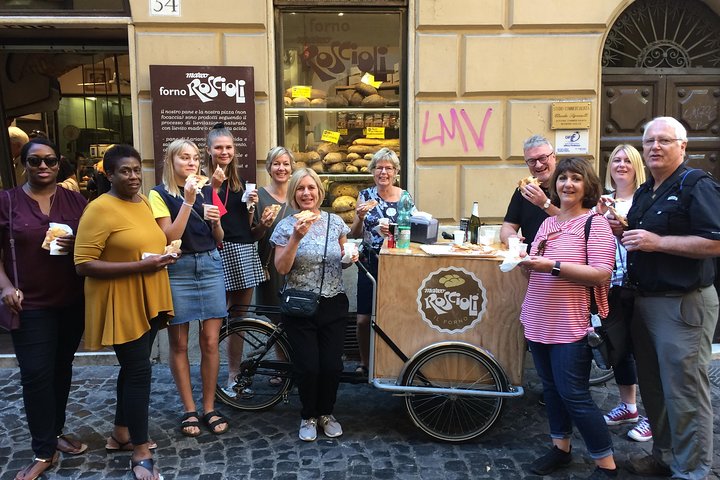
Rome's food scene rewards people who know which counter to stand at, and that is precisely what a good food tour buys you. The classic route runs through Trastevere or the old market quarter of Testaccio: supplì fried to order, carbonara where it was arguably invented, and gelato made that morning rather than piled in fluorescent mountains.
Come hungry — the better food tours run six to eight stops and genuinely replace dinner. Evening departures double as the best introduction to Rome's neighbourhoods after dark, when the city does most of its living.

Pompeii is 240 kilometres south of Rome, and the high-speed train to Naples makes it a realistic single day: most Pompeii day trips run about twelve hours door to door, often pairing the ruins with Sorrento or a drive along the Amalfi Coast.
Go with a guide inside the site itself. Pompeii is vast and mostly unlabelled — the difference between wandering streets of rubble and understanding that you're standing in a bakery, a bathhouse or an election poster is entirely down to who is explaining it. For other options on the same day, see the full list of day trips from Rome. Summer visits need water and a hat; there is almost no shade.

Central Rome is one connected open-air museum, and the walk from the Trevi Fountain past the Pantheon to Piazza Navona covers more famous ground per hour than anywhere else in Europe. Guided evening walking tours are the pick: the fountain is lit, the coach groups are gone, and the guide's stories land better without a crowd pressing in.
The Pantheon now uses a small timed entry ticket, which walking tours usually pre-book — one less thing to queue for. Keep a coin ready at the Trevi Fountain; the toss works out to about a million euros a year for Roman charities.

The Borghese Gallery caps every two-hour slot at a few hundred visitors, which makes it both the most civilised museum tour in Rome and the one that sells out furthest ahead. Bernini's sculptures here — Apollo and Daphne mid-transformation, David mid-throw — are the kind of things photographs flatten completely.
Book a week or more in advance, or take a guided museum tour that includes the reservation. The surrounding Villa Borghese park is the natural follow-up: rent a rowboat, find the Pincio terrace, and take the best free view over Piazza del Popolo.
Rome sits at the edge of serious wine country, and the Frascati hills — the Castelli Romani — are close enough that a vineyard wine tasting and lunch is a half-day outing rather than an expedition. Tastings here tend to be generous, family-run affairs: cellar walk, four or five pours, and plates of porchetta that quietly become a full meal.
In the city itself, guided wine tastings pair Lazio's whites with regional cheese and salumi in enotecas you would never find on your own. It's the best rainy-afternoon plan Rome has.

A Rome bike tour covers in three hours what would take a full day on foot — the historic centre is flatter and more bike-friendly than it looks from a map. Routes typically loop the Circus Maximus, Aventine Hill's orange garden, and the old Roman paving of the Appian Way. E-bike options remove the one real obstacle, which is the occasional cobblestone climb.
Morning bike tours beat the traffic and the heat equally well. It's also one of the few tour types here that genuinely suits families with older kids — more novelty, less standing in line.

Beyond the marquee sites, Rome's history is layered into ordinary streets — a Renaissance palazzo built over a Roman theatre, a church floor made of recycled ancient marble. Themed cultural tours are how you actually see that: Jewish Ghetto history, underground catacombs, or Rome after dark with a torch and a ghost-story bent.
These walking tours run smaller and slower than the big-ticket Colosseum groups by design, usually eight to twelve people, and reward a guide who genuinely specialises rather than one covering every era at once. Good for a second or third day, once the major sights are already checked off.

Trastevere is Rome with the volume turned down: ivy over ochre walls, laundry between windows, and lanes that were clearly never meant for cars. It photographs well at any hour but comes alive after seven, when the trattorias put tables out on the cobbles.
Evening Trastevere tours usually mix food, wine and neighbourhood history — the church of Santa Maria in Trastevere holds some of the city's oldest mosaics, glowing gold under the night lighting. Pair it with a climb up the Gianicolo terrace for the classic dusk panorama over the domes.

A multi-day Rome tour with the same guide for two or three straight days sounds like overkill until you realise how much easier it makes everything: no repeating your interests to a new person each morning, no re-explaining that you already did the Colosseum yesterday. Multi-day packages typically front-load the big sites on day one, then loosen up for neighbourhoods, day trips or cooking classes as the trip goes on.
They suit first-time visitors with three or more days more than short-stay travellers — the value is in the itinerary planning being done for you, not in any per-day discount. Worth it if you'd otherwise spend an evening every night deciding tomorrow's plan.

Rome makes an unusually good base for day trips. Tivoli's two villas — Hadrian's sprawling retreat and the thousand fountains of Villa d'Este — are 40 minutes away and combine into one relaxed day. The Amalfi Coast, Florence and even Tuscany's hill towns are all feasible as long single days thanks to the high-speed rail lines that fan out from Termini.
Organised day trips from Rome earn their keep on the routes where logistics are annoying — coastal roads, vineyard clusters, anywhere a car and a designated driver beat three train changes. For the closest and most popular option, see Pompeii day trips. Check the included time at each stop before booking; the good ones give you hours, not photo stops.
